 Public lands are the foundation on which the outdoor industry was built. They are the places where we test our products, where our stories originate, and where outdoor communities are built. According to Paul Hendricks, Executive Director of The Conservation Alliance, the scale and speed of the threats to public lands right now is unlike anything the industry has faced before. “We’ve seen just an all-out attempt across all branches of our government to open up our public lands to extractive industries,” he said. “It’s not flood the zone anymore. It’s a tidal wave, then another tidal wave, then another.”
The shift from isolated threats to systemic ones is what makes the need for advocacy immediate. In the past, advocacy often looked like defending individual landscapes, one at a time. Now, the stakes are broader. As Hendricks described, the “underpinnings of our public land system are being wiped out,” from the weakening of cornerstone legislation to the dismantling of long-standing management frameworks. Policies that once felt foundational are being treated as optional. Agencies are being reshaped. Safeguards are being stripped back. Perhaps most significantly, it’s all happening at a pace designed to overwhelm.
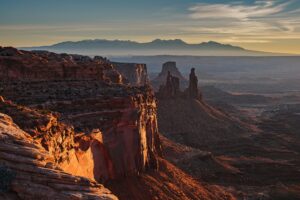 In a recent webinar hosted by Switchback “Lay of the Land: Protecting Our Public Lands and Waters,” leaders from The Conservation Alliance and RE:PUBLIC noted a convergence of forces pushing toward accelerated extraction policies, reduced agency capacity, and eroding legal guardrails that once protected our public lands. Together, they represent a redefinition of how public lands are valued and managed. It would be easy, in the face of that, to feel paralyzed and assume the problem is too large, too complex, or too political.
The goal of this article isn’t to bum you out, though. There is good news. The outdoor industry is uniquely positioned to respond to these threats because it sits at the intersection of culture, economy, and access. It also represents a strong political force if we speak up and work together.
“We need businesses to use their voice,” Hendricks said. “Advocacy, at its most basic form, is standing up for what you believe in.” That might sound simple, but in practice it represents a meaningful shift. For decades, many brands and retailers have been cautious about stepping into advocacy, concerned about alienating customers or wading into perceived political territory. But the framing around public lands is evolving and perhaps returning to something more fundamental.
 Public lands are not a niche issue. They are, as Hendricks put it, “the great equalizer.” They are where Americans hunt, fish, hike, ride, climb, and gather. That cross section of enthusiasts runs across political, geographic, and economic lines. That equality matters because one of the most persistent misconceptions about conservation is that it belongs to one side of the political spectrum.
In reality, the constituency for public lands is far broader. It includes backcountry skiers and RV travelers, anglers and climbers, small-town outfitters, and global brands. It also includes the customers walking into independent retail shops every day.
For retailers, the connection to public lands is not abstract. It’s daily. It’s the customer walking in for trail shoes before a weekend in the mountains. It’s the fly angler gearing up for a trip. It’s the family asking where to camp in your local region. The health of those places is directly tied to the health of the business.
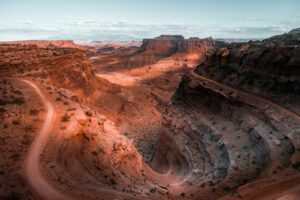 In the face of this potentially existential threat, Kent Ebersole, President of Outdoor Industry Association, sees the industry’s greatest strength in its willingness to come together and solve problems collectively. “No other industry comes together and says, ‘We need to solve a problem like this,’” he said, pointing to gatherings like Switchback and the OIA Rendezvous as catalysts for that kind of action.
That collective muscle is being reawakened on a macro scale. At recent industry gatherings, Ebersole described a palpable shift from passive concern to active urgency. Leaders weren’t just discussing issues; they were calling for action. Public lands rose to the top of that list, not as an abstract value, but as a core pillar of the industry’s future.
 Importantly, that call is no longer aimed solely at big brands. “Retailers are the local army,” Ebersole said. “They have the ability to deploy at the local and regional level like nobody else can.” That insight reframes advocacy from something distant to something immediate. A one-door shop in a rural town may not see itself as a policy player, but to an elected official, that business represents jobs, community, and votes. “You say small business and they care,” Ebersole noted. “It’s an economic driver and they know it.”
One of the most consistent themes across these big-picture advocacy conversations is that no single brand, retailer, or organization can meet this moment alone. But together, the outdoor industry represents a powerful, unified voice. Public sentiment around protecting lands and waters is at historic highs. Americans value access to public lands across political lines. They’re more than just recreational spaces; our public lands are a part of the country’s identity.
Now is the time for action. We invite you to use Switchback Spring as the place to strengthen your resolve, increase your current levels of knowledge and advocacy, or find a place to use your voice. This in-person national gathering creates a unique opportunity for the outdoor industry to align and figure out how we want to take action together.
That action does not need to be complicated. “If every single attendee walked away and said, ‘I’m going to take action on one thing,’ think about the difference that would make,” Ebersole said. Multiply one action across an entire show floor, and it starts to look really powerful. It looks like momentum.
This article is featured in the Switchback Spring 2026 Event Guide. Click here to explore the full guide to plan your experience this June 16-18, in New Orleans.