
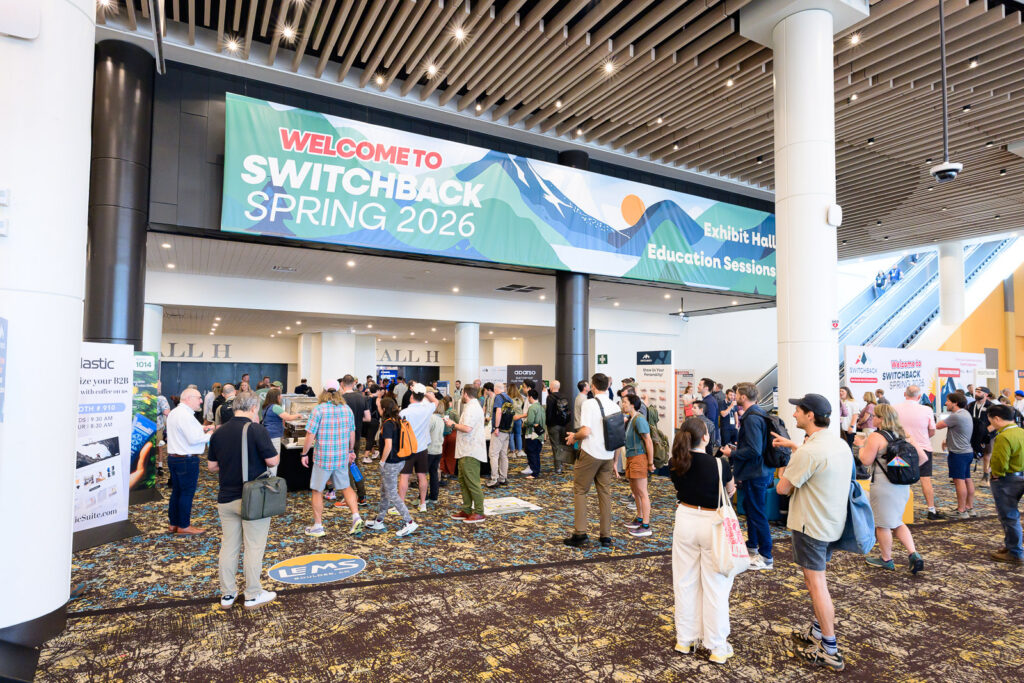
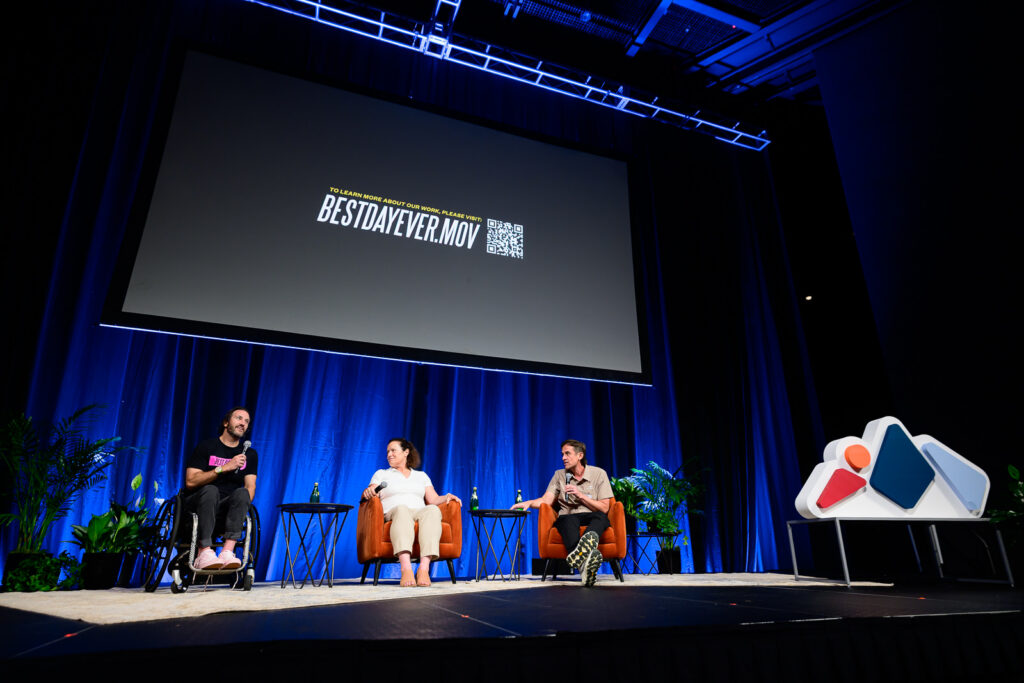
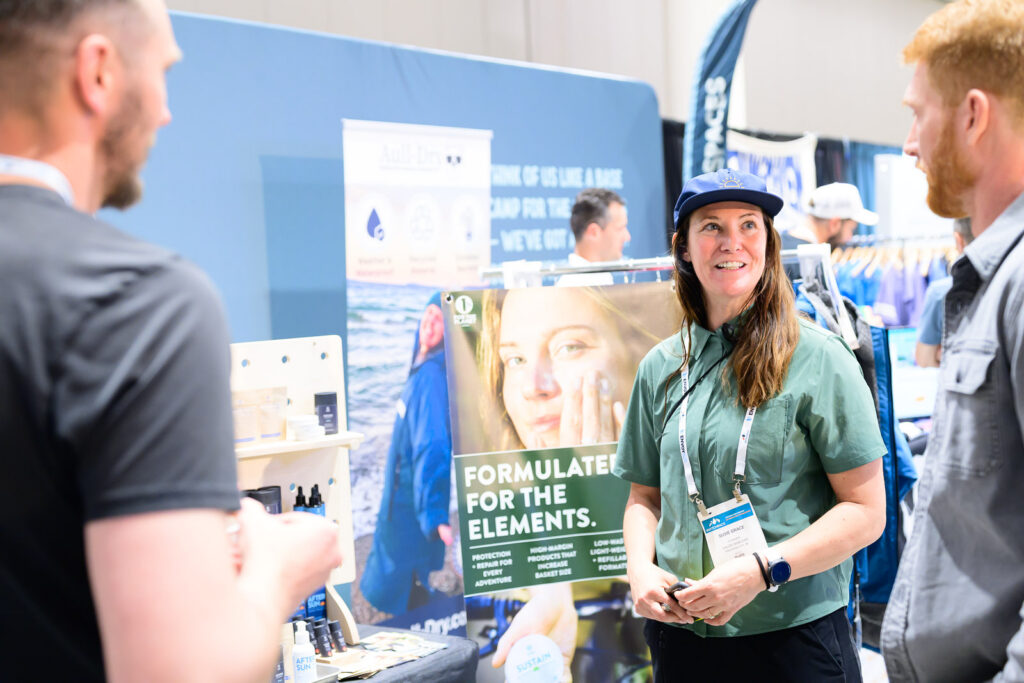
That’s exactly where a national show comes in—it not only enables our community to work together more closely, but it also provides a much better perspective on the big issues facing the business community.
 Kelly Davis, director of research for Outdoor Industry Association (OIA), summarized this broader view when she debuted the 2026 Outdoor Participation Trends Report during the opening presentation. She noted that a record 183.2 million Americans participated in outdoor recreation in 2025. Yet, participation per person is declining, and the industry is losing adults aged 18 to 34, with the 25 to 34 group falling by 2.8% due to economic stress, high housing costs, and career instability.
While the high-level look at the outdoor market was sobering, it was also extremely useful, says Adrienne Michelle of Prospector Outfitters, an outdoor retailer with three locations in Alaska. “As an independent retailer, we’re in charge of all of our own marketing and promotions,” she says. “It’s really interesting to get this snapshot of the market, and we can utilize that information to determine what we can do that will make the biggest impact.”
Attendees at Switchback Spring 2026 not only walked away with a clearer look at these macro issues but also discovered tangible solutions to address them. When Davis laid out the financial concerns of consumers, she pointed to the “circular economy” as a possible solution. “One thing that might benefit all of us is offering pre-owned gear,” Davis noted, explaining that the resale market keeps high-quality products affordable for young or diverse participants. To help independent retailers put this data into practice, Switchback included a dedicated breakout session on how stores can successfully incorporate consignment sales and pre-owned gear directly into their existing businesses.
Retailers attending the event also noticed a trend of manufacturers offering key new products at more accessible price points to lower the barrier to entry for a wider, more diverse audience. While these entry-level prices target the cash-strapped 18 to 34 demographic, they also make higher-quality gear attainable for marginalized communities that have historically faced financial hurdles to get outdoors. For instance, Therm-a-Rest is introducing the NeoAir Trail Mix, a lightweight sleeping pad with a retail price of $149.95, as well as the NeoLoft XXL, a roomy synthetic sleeping bag priced at $299.95.
Pricing and affordability were undoubtedly major themes at this year’s gathering, as brands and retailers figure out how to cater to a cash-strapped consumer base. For an independent shop owner, navigating those hurdles on top of daily operations can be exhausting, which is why stepping away from the storefront to get a fresh perspective proved so valuable.
Colin Maneval, owner of Summit Bound Outfitter in Somerville, MA, emphasized the value of that change of scenery for independent owners. “It gets me excited to do things I don’t consider when I’m dealing with spreadsheets, invoices, products, and boxes,” he said. For him, stepping away from daily operations provided the spark to rethink his store’s marketing.
While individual owners are working hard to solve their own retail puzzles, they rarely have the bandwidth to tackle the macro issues threatening the broader industry. That is where collective action becomes essential. In a discussion on protecting wild spaces, Paul Hendricks, executive director of The Conservation Alliance, warned that legislative rollbacks and industrial extraction threaten the entire outdoor economy. He cited risks to Grand Staircase-Escalante National Monument, Boundary Waters Canoe Area Wilderness, the Endangered Species Act, and the Clean Water Act. “The foundations of our industry are being eroded,” he warned.
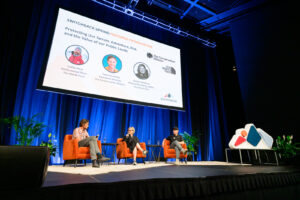 Hendricks emphasized that small business owners carry significant weight when they voice their concerns to elected officials. “The business voice for conservation is absolutely critical,” he said. “If we’re going to push back and convince current and future administrations that public lands are worth protecting, not just for biodiversity and climate, but for economies and jobs and communities, it’s the business voice that will do it.”
Collective action also expands the recreation economy, a trend driven by regional outdoor business alliances. At a panel in the Trailheads Theater, representatives from state alliances in Vermont, West Virginia, North Carolina, and Oregon described how local groups can share operational lessons, prevent costly mistakes, and work together to present outdoor recreation as a key job creator to legislators.
Mike Wallenfells of the Oregon Outdoor Alliance highlighted a six-year collaborative effort that culminated in historic legislation, contributing $2.5 billion to the state’s outdoor recreation economy. By organizing these alliances, independent businesses are proving that regional cooperation is their greatest asset. Summarizing the panel discussion perfectly, Anna Rawlins, chief marketing officer at Eagles Nest Outfitters, noted, “We have a stronger voice overall as a community than we do as a solo brand.”
Outdoor economies are more resilient when they welcome a wider range of people and build a truly diverse community. Attending a national show with a quality list of exhibitors and attendees brings together opportunities for discovery, innovation, and connection into one place. This is where ideas can turn into action, and real impact and growth will follow.
Another major theme addressed normalizing outdoor access for all. To build a stronger collective voice, we must ensure the community is broad enough to represent everyone. When we’re more inclusive and we expand the outdoor community, we gain new perspectives and fresh ideas. We are better positioned to connect with underserved participants, understand their perspectives, and address barriers to participation. This focus on inclusivity was front and center during many sessions hosted by Switchback’s partner organizations.
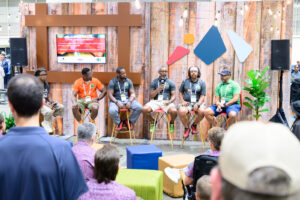 Black Men Run (BMR)-TURF (Trail and Ultra Running Fanatics) hosted a panel highlighting how national gatherings give brands and retailers a direct, face-to-face look into cultural nuances and real barriers—ranging from lacking access to the proper gear to feeling uncomfortable in trail spaces. Moderator Tommie Runz highlighted this issue, noting how critical it is for outdoor businesses to understand “why I would be intimidated by going to a different type of group run” when transitioning from road running to the trail. As Oscar Camejo of TURF emphasized, brands and retailers must better understand a consumer’s mindset to create meaningful community activations.
At a separate presentation on the third day of the show, Abigail Hollie, senior program manager for the Running Industry Diversity Coalition (RIDC), pointed out that specialty retailers are uniquely positioned to act as the front line for this work. Hollie noted that local shops play a key role in increasing both the visibility and accessibility of trail running. To help stores bridge the gap, she highlighted that the RIDC offers a comprehensive toolkit specifically designed to lower the barrier to entry for Black, Indigenous, and People of Color (BIPOC) trail runners. By leveraging these types of practical resources, independent retailers can transform their storefronts into welcoming access points for entirely new communities.
Putting those kinds of practical tools to work is a great start, but building a broader, stronger market that can withstand today’s challenges takes intentional effort. It means moving past quick transactions to build real relationships—and that only happens when a diverse group of people actually gets face-to-face to tackle our biggest industry hurdles and opportunities together.
This authentic, forward-looking mindset reminds us that our work isn’t just about moving inventory for next season but about building a resilient outdoor industry that will survive well into the future. As Oscar Camejo of TURF emphasized, “It’s not just about the product. It’s about building a legacy.”
