
 Across the country, the outdoor recreation sector is undergoing a structural shift. While local outdoor businesses have historically lacked a structured way to take collective action, a unified movement is taking hold. Today, retailers, manufacturers, nonprofits, and accessibility organizations are forming regional outdoor business alliances (OBAs) to bridge that gap. These grassroots organizations support local outdoor businesses, advocate for public infrastructure, and protect the places where we all play outside.
As OBAs gain traction, they have found a national home in SOBAN (State Outdoor Business Alliance Network), an organization that unites individual state interests into a cohesive national force.
To gain a better understanding of OBAs and SOBAN, we sat down with Jonathan Jarosz, a core member of the SOBAN leadership team and executive director of the Michigan-based conservation nonprofit Heart of the Lakes. We discussed the growth of OBAs and SOBAN, the vital distinction between non-governmental alliances and state offices, and how independent retailers can participate at the local level and within their communities.
Trailheads: To start, can you describe the makeup of a state outdoor business alliance? What does it look like, and who qualifies to be a member?
Jonathan Jarosz: I would describe three distinct types of OBAs. The first type is “business only.” These alliances function like traditional trade associations or chambers of commerce, focusing exclusively on manufacturers and retailers. The second type is “business plus,” which is still heavily business-focused, but includes outdoor-adjacent organizations. And then the third type is the “big tent” alliance, which involves everybody interested in supporting the outdoor economy and the outdoors in a particular state, including businesses, nonprofits, accessibility organizations, and land trusts.
Trailheads: Building on that, what is the general trend with state outdoor alliances right now? Are more being formed?
Jarosz: Right now, more are coming on board. About 24 states have OBAs. Local communities and counties are leaning heavily into the outdoors, not just as a quality-of-life indicator, but as a primary reason why people choose to live somewhere. This resonates with communities that are watching healthcare and quality-of-life costs rise. The health and wellness piece has become a major factor, driving many communities to look at how states are organizing and forming alliances.
Trailheads: You also mentioned a rise in the number of state outdoor recreation offices (OREC). How does the mission of a state recreation office differ from that of a private business alliance?
Jarosz: An OREC office is a function of government, so its role is limited like any other government functionary. OREC offices are situated within an agency—sometimes that’s a natural resource agency, sometimes that’s an economic development agency, sometimes it’s tourism. I would frame them as an acknowledgment of a state’s view and importance of the outdoor economy and outdoor industry. The offices range from a one-person operation in a closet with no budget to 20-plus people. And most of them are a one-person operation in the closet with no budget.
Private outdoor alliances can amplify an OREC office’s message and the needs and programs the office wants to deliver. Sometimes that’s in lockstep with those offices. Sometimes it serves as an outside voice saying things that the offices can’t. And at the most extreme, they can frankly push and control the office and state government to do things they feel the industry and the economy need.
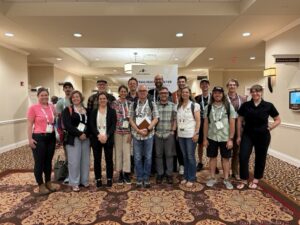 Trailheads: Let’s discuss SOBAN’s structure and its mission.
Jarosz: SOBAN is what we call a learning network. It’s made up of state outdoor alliances and exists largely to share past knowledge and set the agenda for what’s next. It’s definitely not an overlord of individual states, but more of a place for them to have a home. As new states develop outdoor alliances, SOBAN serves as a repository of what people have tried that has worked and what hasn’t—sort of best practices. SOBAN organizes around five pillars: economic development, workforce development, health and wellness, conservation and stewardship, and access and accessibility.
Trailheads: How does SOBAN’s work differ from, or complement, what Outdoor Industry Association (OIA) does?
Jarosz: We see SOBAN as a 50-state solution to these conversations. OIA, one of our closest partners, does a lot to help set a national policy agenda. That’s great for action in Washington, D.C. When we want the message and those actions to rise up from the grasstops, that’s where the 50 states come into play. With things like legislation or, for example, the conversation around PFAS (per- and polyfluoroalkyl substances), states can learn from each other directly and share info on what worked and what didn’t for legislation. OIA can set the table for the conversation, and then each individual state needs to be able to adjust to their own dietary needs. It works really well because OIA isn’t trying to be active in 50 states, since it can’t be.
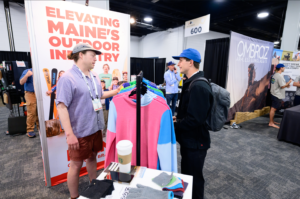 Trailheads: What level of participation is SOBAN getting from independent outdoor retailers?
Jarosz: In general, there’s low awareness of SOBAN among independent retailers. It varies by state based on the strength of existing retail and brand rep networks. I think there’s more opportunity for independent specialty retailers to engage than they’re probably aware of. The question specialty retailers have is, “Well, what do we get out of it?” And the answer is that visibility, that authenticity, that sort of broad support from a larger network. They can benefit from collective expertise in areas such as bookkeeping, brand relationships, merchandising, and conservation partnerships. No one is good at everything, and a learning network lifts everyone and can help retailers improve their business. Also, it sounds a little cheesy, but it’s very lonely in specialty retail. It’s a lot of long hours. The SOBAN peer community can help retailers combat that loneliness.
Trailheads: For the immediate future and for the long term, what are the main things SOBAN is working on right now?
Jarosz: In 2026, SOBAN will bring in a formal coordinator to take on some of the heavier workload. Thus far, it remains organized by a self-assigned, self-ascribed leadership team. Also, we’ll be releasing our national policy framework, which outlines our thoughts on what makes a healthy outdoor economy from a national perspective and what areas we can work on that will trickle down into individual states. And third, we’re formalizing and institutionalizing partnerships with The Conservation Alliance, Switchback, OIA, and others. We’ve had longstanding informal relationships, but now we can point to physical documents with signatures.
Trailheads: What’s the best way for an individual business owner to get involved with their local state alliance? How do they go about that?
 Jarosz: The first step would be to visit Soban.org and see if we have a listing for an existing outdoor alliance in your state. In states without a widely recognized alliance, any member of our SOBAN leadership team can point you to people who are having informal discussions. If nothing exists, our leadership team can provide step-by-step organizing resources to build one.
Trailheads: Any final thoughts on where this movement is heading as you look down the road?
Jarosz: The outdoors is a cornerstone of our communities. And to have a healthy community, you need an economy with healthy nonprofits and businesses, as well as people who are healthy physically, mentally, and financially. The collective body of knowledge is what allows all ships to rise. We’ve had longstanding informal relationships, but the Facebook status just changed from “it’s complicated” to “in a relationship.” It’s more of an announcement to the world that you know what? We’ve been doing stuff together. We believe in each other, and this isn’t going away.
To learn more about SOBAN and outdoor business alliances, explore the state showcases on the show floor at Switchback Spring in New Orleans, LA, June 16-18. Also, during Switchback Spring, join the conversation during the SOBAN panel discussion at the Trailheads Theater on Thursday, June 18.
