At 5:30 a.m. MST on Saturday, February 21, Drew Saunders’ phone started buzzing.
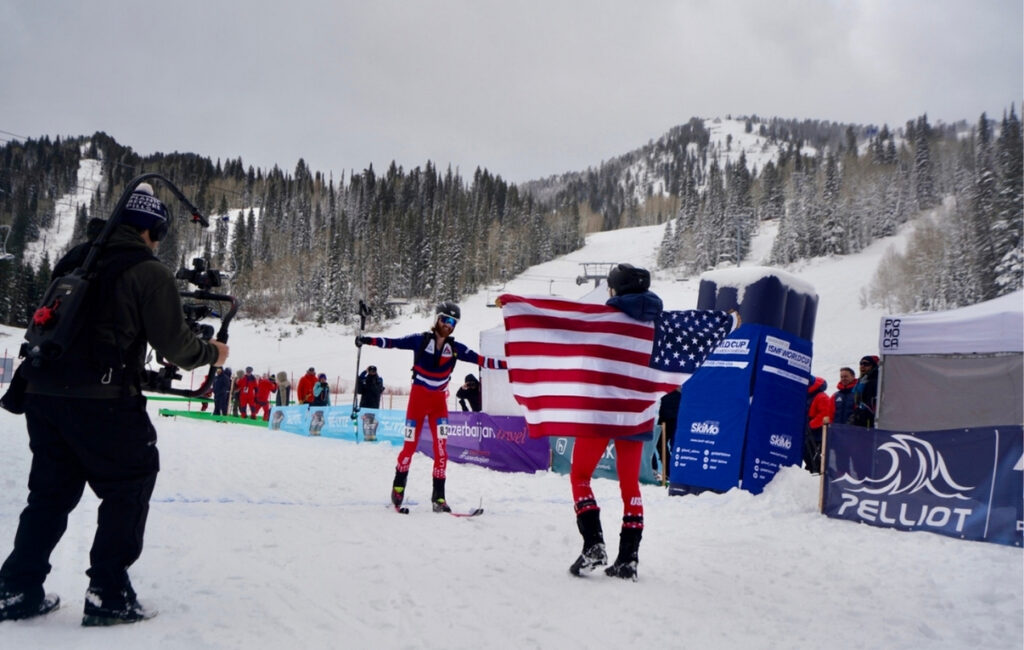
The North American General Manager for Oberalp, parent company of heritage skimo brand Dynafit, was getting exclamation-laden texts from his mom and cousins on the East Coast. They were watching Dynafit athletes Anna Gibson and Cam Smith compete in ski mountaineering’s Olympic debut in the Skimo Mixed Relay. And they were pumped. “I really love this event. I think it will catch on and become more popular,” texted his cousin Kelly. For Saunders, who has spent 18 years working in the category, the excitement was both personal and professional. He says he couldn’t have been happier with how Cam and Anna represented the sport. For a discipline that has long lived in the margins of North American skiing culture, seeing broadcast graphics explaining transitions, skins, and vertical gain felt surreal.
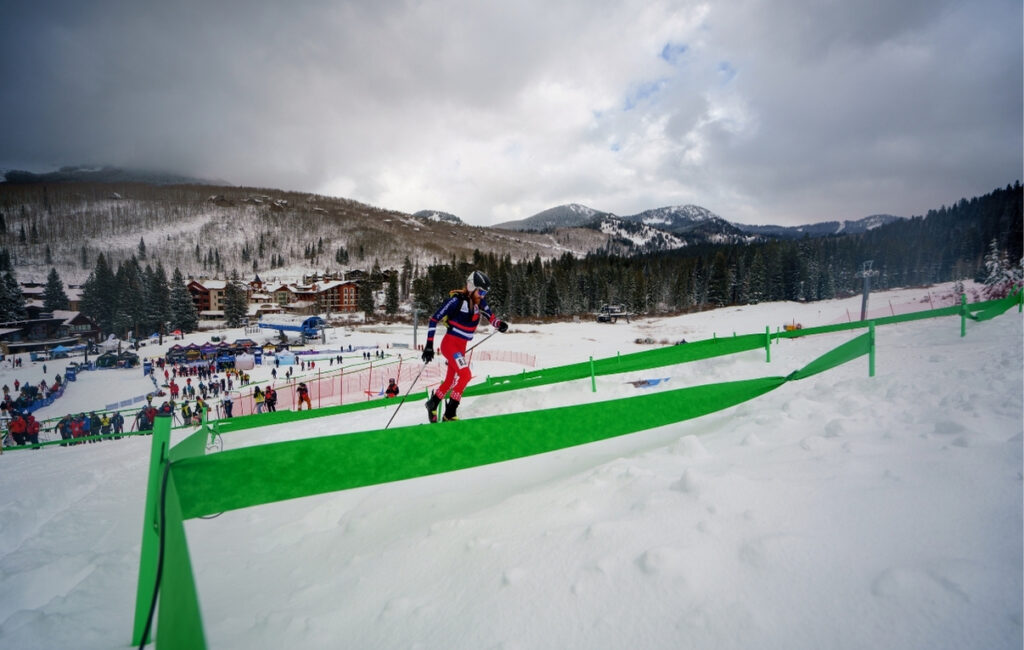
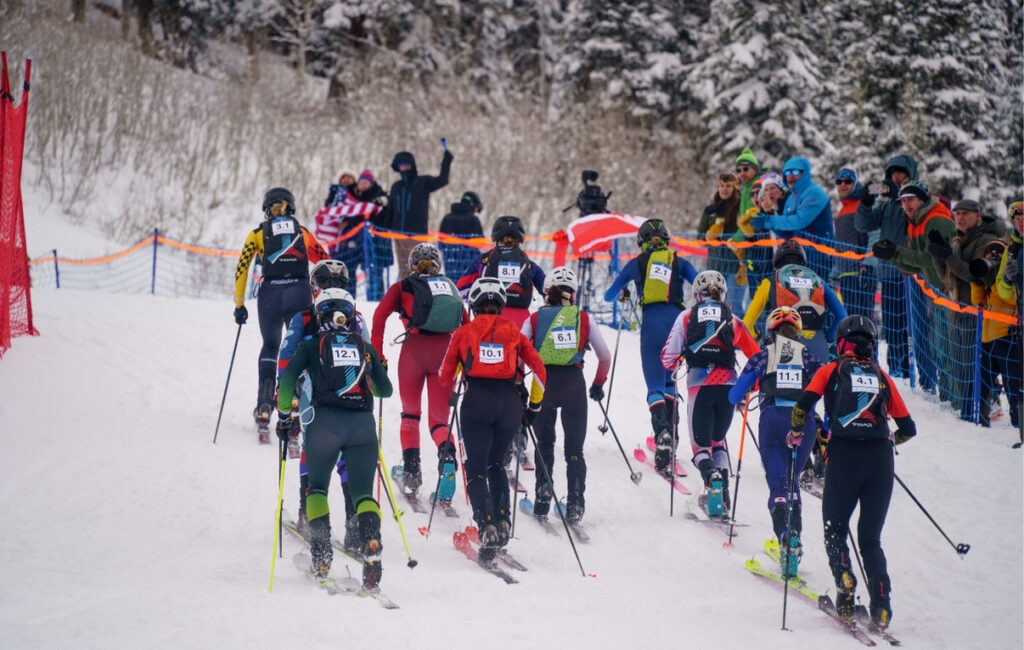
Ski mountaineering (skimo) blends uphill skinning, technical transitions, and downhill skiing into a high-output endurance race. Athletes ascend using climbing skins affixed to ultralight skis, rip them off in transition zones, shoulder skis for bootpacks, and descend on minimalist race gear that often looks more like road cycling apparel than a traditional ski kit. It is fast, technical, and unapologetically nerdy. Gram-counting, race-suit-wearing, heart-rate-monitoring mountain athletes have quietly used the sport as a proving ground for gear innovation for years.
Even on the Olympic stage, that gear mattered. Saunders notes that all of the winners were using Pomoca skins, a reminder that efficiency uphill is non-negotiable at this level. And, as he explains, there is always a trickle-down. The highest-end race skins and ultralight systems eventually inform the products that everyday backcountry skiers use. What happens at the sharpest edge of the sport rarely stays there.
 For Saunders, Olympic inclusion represents a meaningful inflection point, but he was careful to make an early call that it would be an overnight transformation. “We see the inclusion of skimo at the Olympics as another big step forward for the credibility and visibility of the sport,” he says. “It is rewarding for those of us who have been supporting and following the sport for a long time. And it is an introduction to the sport for many people who have never heard of it or were barely aware of it prior to the Olympics. A lot of Olympic viewers came away with a newfound awareness and appreciation for the sport of skimo.”
While we may not see a spike of sales on 250-gram skis built to run uphill, the new awareness could have an important generational impact. “We believe that the incredible world stage that the Olympics provided for skimo will inspire the next generation of U.S. skimo athletes to follow in the footsteps of Anna and Cam in the same way that Mikaela and Bode inspired young alpine ski racers,” Saunders says. Instead of aspiring solely to downhill podiums, young athletes in ski clubs may now see a viable path forward in ski mountaineering.
History suggests that Olympic visibility does not automatically translate into immediate retail spikes. Saunders points to Oberalp’s experience when sport climbing entered the Olympics. The exposure was positive for the sport and industry overall, but it did not result in a sudden rush on elite climbing gear. The same is likely true here – just as consumers are unlikely to buy the exact skis that a downhill gold medalist raced on, a surge in direct sales of skimo race suits is also doubtful to happen overnight.
The most core skimo athletes, the ones who can recite the weight of every piece in their kit to the gram, were already invested long before Milano/Cortina. Where Saunders sees more practical opportunity is in what Dynafit defines as “fitness skiing.” The Olympic spotlight showcased the advantages of specialized, lightweight gear for going uphill fast and efficiently, and that message extends beyond racing.
“The focus on skimo at the Olympics was a spotlight on the sport and the specialized gear that gives athletes such an advantage at going uphill fast and efficiently,” Saunders explains. “Some specialized retailers sell skimo race equipment really well, and the Olympics should help. But all backcountry ski retailers can offer lighter weight gear and packages to service that next group of skiers that are interested in fitness skinning or uphilling at ski resorts for the exercise and enjoyment that skiing up and down the mountain offers. The Olympics were a nice boost to show the benefits of that gear in an inspiring way.”
For retailers, that may mean reframing the category. Instead of focusing narrowly on race kits, shops can merchandise lighter boots, narrower skis, efficient bindings, and streamlined skin systems as part of a broader fitness-forward ski offering. Runners and cyclists who already value endurance metrics and vertical gain represent a natural crossover audience. Dynafit views fitness skiing as an important category, and Saunders suggests retailers can use that framework to broaden their customer base.
The uphill segment has steadily grown into a meaningful slice of the ski industry over the past decade. Resort uphill access has expanded, and backcountry participation surged during the pandemic. Skimo remains the Formula 1 of that world – pushing materials, weight savings, and efficiency to their limits, causing a halo effect that benefits the entire touring ecosystem.
For Saunders, the Olympic debut ultimately feels less like a short-term sales event and more like validation. After nearly two decades in the field, he sees it as another step forward in the sport’s progression. The texts from his family that morning underscored something simple: skimo broke into the mainstream consciousness, if only for a few hours.
Spandex skimo kits may not fly off shelves, but a global spotlight on uphill efficiency and athletic skinning could inspire more skiers to explore earning their turns and getting a killer workout while doing so. And for specialty retailers willing to meet that curiosity with smart, fitness-oriented assortments, skimo’s Olympic moment may prove to be a meaningful boon with a long tail.