
Over the past five years, LGBTQ Outdoors has made outdoor recreation more accessible and welcoming to thousands of people nationwide. The nonprofit organization organizes and hosts gatherings throughout the country where members of the LGBTQ+ community explore trails, learn outdoor skills, and meet new friends in a safe and welcoming environment. Despite its positive impact, the nonprofit organization has reached a critical moment, and its future is uncertain.
“Our growth has been incredible, but the reality is this: we are at a financial crossroads,” the organization says in a GoFundMe campaign launched this month. “The truth is, we need our community and allies to step up more than ever if we’re going to keep this movement alive.”
Historically, LGBTQ Outdoors has relied heavily on corporate support, with funding for its programs primarily sourced through Diversity, Equity, and Inclusion (DEI) initiatives. This year, however, the organization has faced a significant setback, losing over $25,000 in anticipated funds as corporations significantly scaled back their DEI programs. The GoFundMe campaign aims to support the organization’s operations for the remainder of the year.
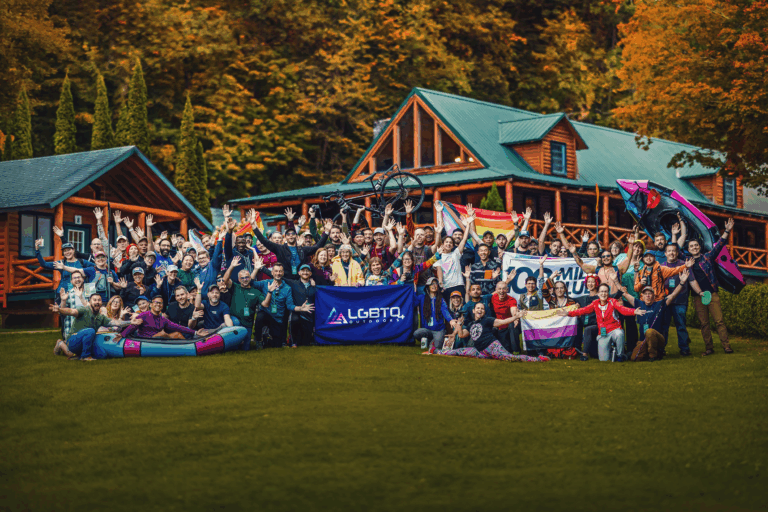
If the nonprofit is forced to close, the LGBTQ+ community and the outdoor industry will lose a valuable resource. LGBTQ Outdoors organizes events in two dozen states and hosts large gatherings, such as its annual LGBTQ Outdoorfest, where often-marginalized individuals can feel comfortable and secure in outdoor recreation.
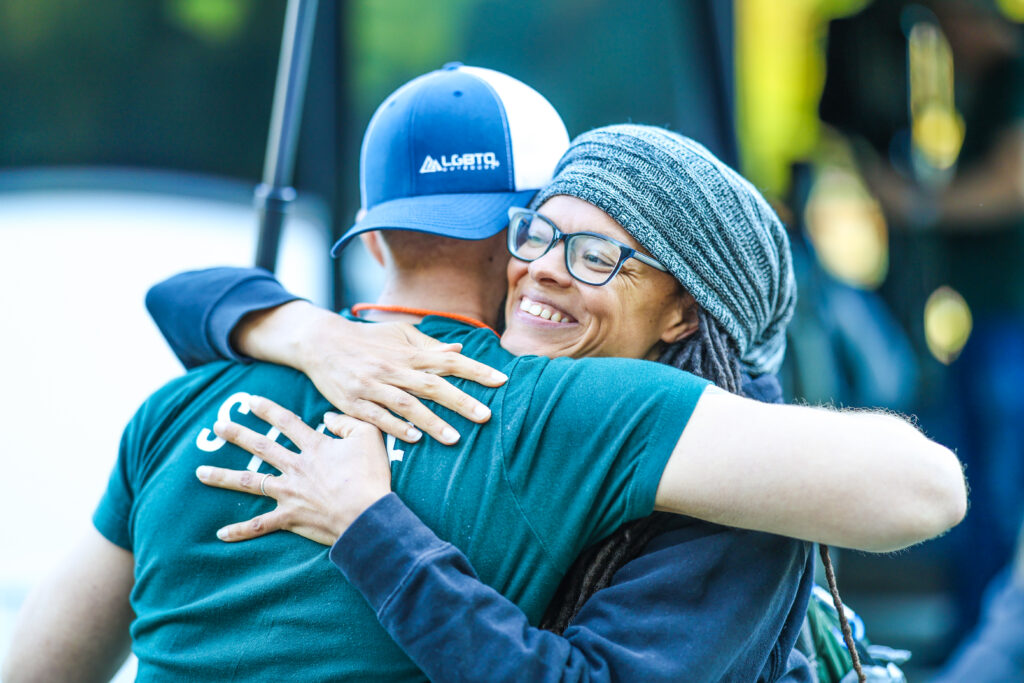
“It’s a safe space to just find connections with people,” says Julian (He/Him), an Outdoorfest attendee. “Being trans, it’s been really tough for me to find community, and it’s not an identity that I’ve really been too proud of. But LGBTQ Outdoors gives me hope knowing my people are out there.”
The LGBTQ+ community has become a crucial and highly engaged segment of the outdoor industry. As of 2024, they represented 11.4% of the outdoor participant base, or 20.6 million people, according to Outdoor Industry Association’s (OIA) 2025 Outdoor Participation Trends Report. Furthermore, the report identifies the LGBTQ+ community as “the most active adult cohort in outdoor, with total participation rates above 60%.”
Despite this high engagement, participation rates could decline if the industry fails to support the organizations that serve as vital touchpoints for LGBTQ+ outdoor enthusiasts.
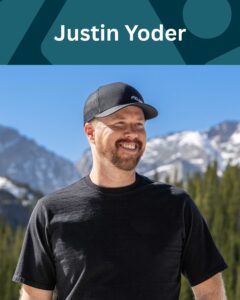
About six years ago, Justin Yoder conceived the LGBTQ Outdoors concept during his own struggles to fit in with the outdoor community in Fort Worth, TX. “I really had a hard time finding a place where I could be myself and be accepted,” says Yoder.
So, he started an Instagram account and named it LGBTQ Outdoors. “The purpose of that was to break down the stereotype that LGBTQ+ people didn’t like the outdoors,” he says.
The Instagram account quickly gained popularity, resulting in an influx of messages from followers eager to learn how to support efforts to connect LGBTQ+ individuals with nature and with each other. To cultivate this growing community, Yoder launched a website where people could share their personal stories. Then, in 2020, he formally established the non-profit organization, LGBTQ Outdoors.
In its early days, the non-profit focused primarily on community building, starting with small gatherings in the Fort Worth area. According to Yoder, the success of these initial activities was significantly bolstered by the COVID-19 pandemic. Because outdoor recreation was one of the few safe activities available, participation naturally increased. “More people than ever were getting outside because the bars and restaurants were closed,” says Yoder. “That not only helped us, but it caused more people in the LGBTQ+ community to get outside.”
Many of the people attending the gatherings were new to the outdoors, and Yoder focused on creating an emotionally and physically safe environment. He also wanted to make outdoor recreation accessible and less intimidating, so the gatherings eventually incorporated workshops to educate people on outdoor skills.
“We want to help people, whether they’ve never stepped foot in the outdoors, or if they’re already active in the outdoors but want to learn something new, like fly fishing or snowshoeing,” says Yoder. By sharing knowledge, LGBTQ Outdoors helps people feel confident that they can explore the outdoors safely and comfortably.
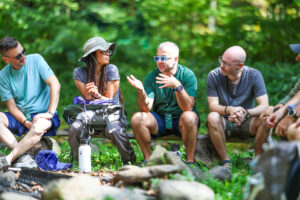 To effectively connect people with nature, LGBTQ Outdoors operates various programs, centralizing its efforts through the Ambassador Program. Established at the end of the organization’s first year, this program is critical for providing members with regular opportunities to get outdoors. Volunteer Ambassadors, who are situated nationwide, drive local participation by organizing events, mentoring new participants, and maintaining the social media presence for their respective chapters.
“We would like the ambassadors to identify as LGBTQ+ but they don’t have to necessarily be the most skilled outdoors person,” says Yoder. “We have some that live in big cities and do things like picnics at a park or birding. And then we have some, especially our Colorado chapter, that like to get up at 3 a.m. and hike a fourteener before noon or do a four-day backpacking trip.”
Initially, LGBTQ Outdoors had just a few ambassadors, but things changed after Yoder participated in the popular National Park After Dark podcast during Pride Month. “When that happened, we just skyrocketed,” says Yoder, noting that LGBTQ Outdoors now has 50 ambassadors in 24 states.
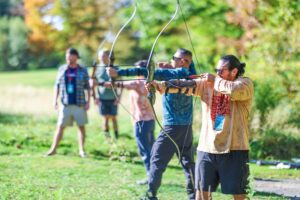 While the Ambassador Program builds and strengthens local LGBTQ+ communities, the annual LGBTQ Outdoorfest serves as a grand gathering that brings together approximately 100 people from all over the United States, as well as a few other countries.
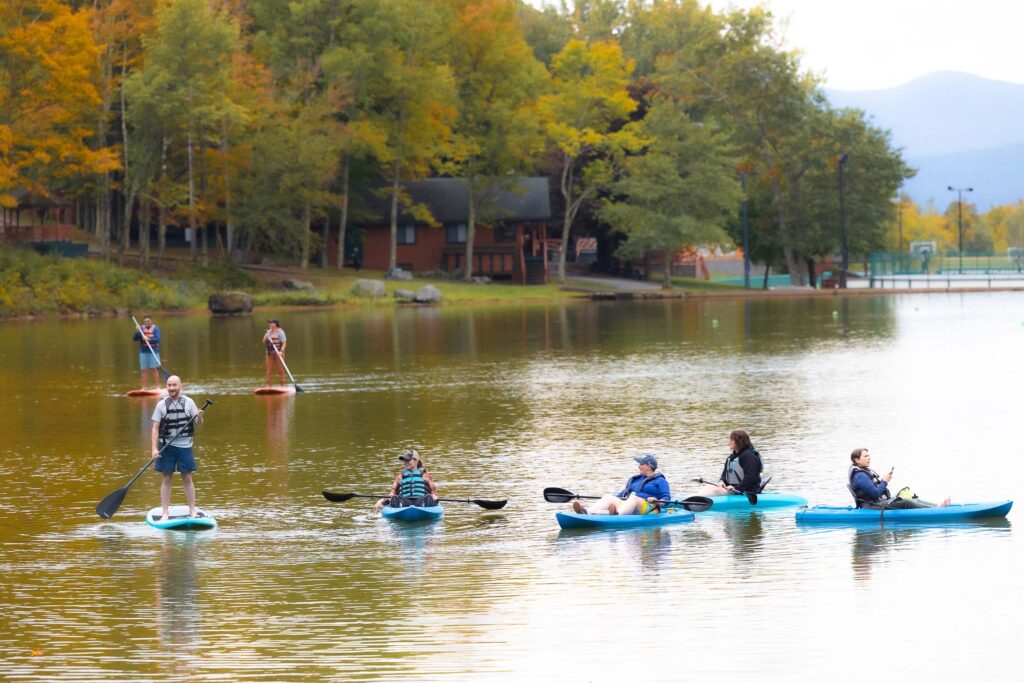
During the four-day event, participants have opportunities to camp, explore trails, and build their outdoor knowledge. In the fall of 2025, LGBTQ Outdoorfest took place in the Catskill Mountains of New York, where participants enjoyed a diverse range of activities, including hiking, paddleboarding, kayaking, fishing, and birdwatching. Additionally, workshops were offered in archery, map and compass reading, pack rafting, planning your first solo hiking trip, and visiting national parks.
For experienced outdoor enthusiasts, LGBTQ Outdoors also hosts adventure trips that involve several days exploring the backcountry. Last year, groups hiked in Alaska and Big Bend National Park, while this year’s destinations included Alaska, Grand Canyon National Park, and Glacier National Park.
Yoder reports that the adventure trips, community gatherings, and other events have not only achieved healthy participation but also established steady momentum. However, to secure the long-term viability of these successful programs, he must now develop sustainable funding mechanisms.
Rather than relying solely on corporate contributions, Yoder is implementing alternative ways to raise funds. For example, the organization launched the Trailblazers Society. In this membership program, individuals donate anywhere from $15 to $100 monthly and receive perks, such as early access to trip registration and discounts on tickets for LGBTQ Outdoorfest.
While member contributions are helpful, LGBTQ Outdoors will still need support from brands and organizations. To establish new partnerships, Yoder is diligently networking at outdoor industry conferences. In June, he attended Switchback Spring in Nashville, TN, and met with representatives from several brands. “The connections we made there were fantastic, and we’re hoping to build on those,” says Yoder, adding that he will follow up with several companies during Switchback at TRE in San Antonio in December.
Despite the current trend of budget tightening and the rollback of DEI initiatives, Yoder hopes the outdoor industry will recognize the strategic value of investing in inclusive organizations. OIA’s research already underscores the significant economic power of the LGBTQ+ community. By supporting groups like LGBTQ Outdoors, the industry directly enables this key demographic to engage in outdoor recreation.
While LGBTQ Outdoors helps broaden the outdoor industry’s consumer base, the true impact of its work lies in profoundly improving people’s lives. As the organization highlights in its GoFundMe message: “LGBTQ Outdoors is more than outdoor adventures—it’s about belonging, connection, and hope. It’s where we discover confidence and community under open skies. It’s where people find friends who become family.”
Click here to contribute to the LGBTQ Outdoors GoFundMe campaign.
