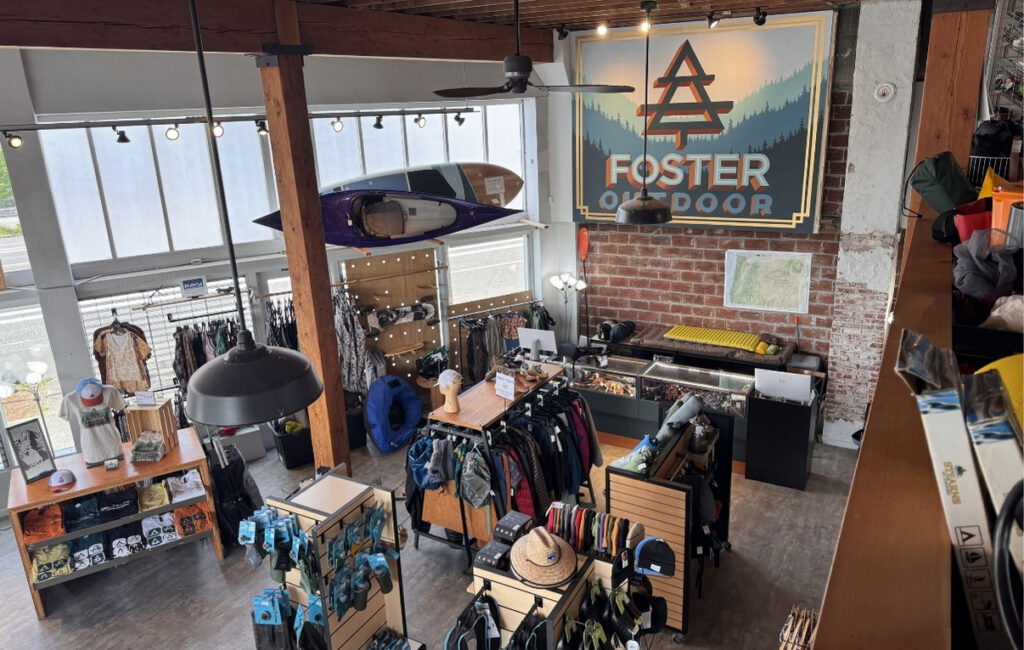
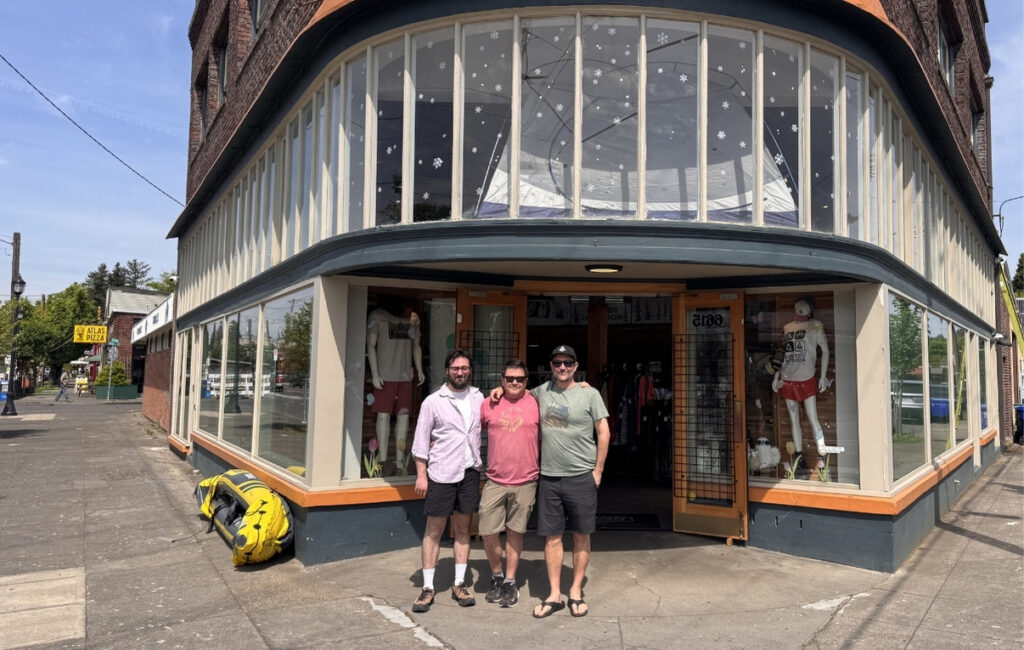
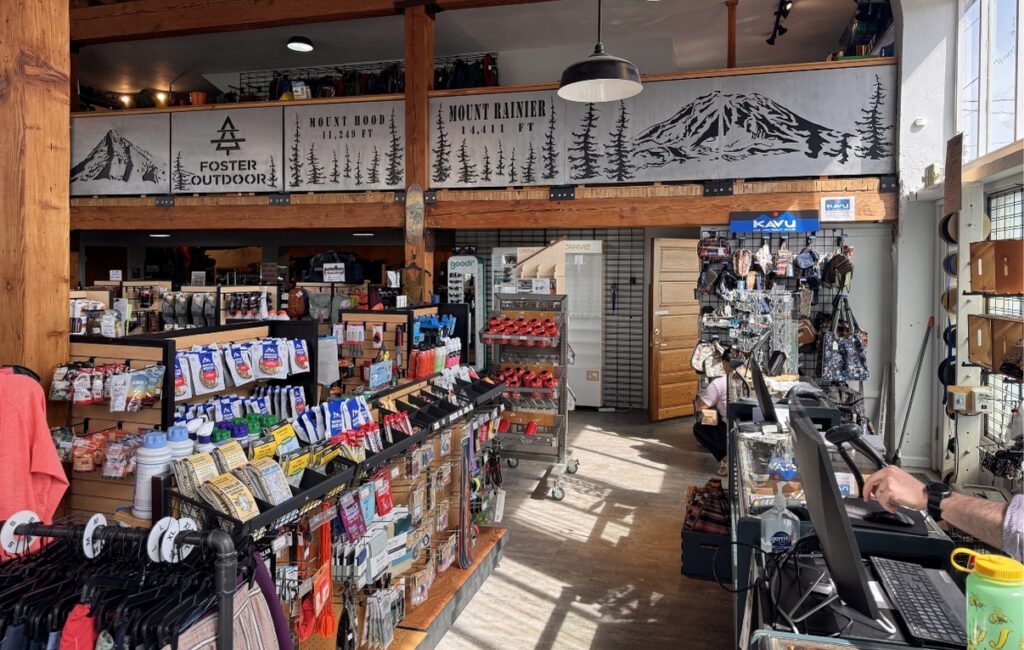
Mike Turner grew up in a ski shop where his mom worked, learned the business from every angle, and spent nearly 20 years managing one of the largest kayaking retail programs in the country for a store he’d come to treat as his own.
 On March 31, 2019, Turner opened his own retail shop, Foster Outdoor in Southeast Portland, Oregon. Turner had worked roughly 400 days in a row from the moment he started planning to the end of the store’s first year — no outside investors, self-financed, just him every single day. Turner set up a tiny workstation in his office for his daughter (then three and a half years old) and built his store for a neighborhood he genuinely loves: seven blocks from home and five blocks from his daughter’s school.
Eleven months in, the COVID-19 pandemic shut them down.
“I just worked 400 days in a row and thought I’d lose our store to a virus.”
Thankfully, he didn’t lose it. Turner borrowed money from the Small Business Administration (SBA) Economic Injury Disaster Loan (EIDL) program, reopened carefully, and caught a wave of outdoor interest that carried them through the next couple of years. He’ll tell you honestly that the pandemic numbers were inflated — paddle boards flying out the door, stimulus spending moving fast. When that ended, it ended. He found himself having to rebuild again on the other side of the COVID bubble.
“In a way, it felt like we were starting our business from scratch all over again,” he says. “Reevaluating everything.”
What came out of that reset is a store that knows exactly what it is.
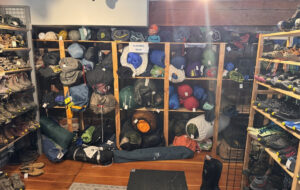 Foster Outdoor operates on a roughly 50/50 split between new and consigned gear, and the consignment side isn’t a rack in the corner — it’s load bearing. The mechanics are clean: consignors get access to an online portal where they can track their inventory, see what’s sold, and cash out or roll their balance into store credit. Turner only pays for items that sell. That structure gives him room to experiment with categories he never planned to carry.
Workwear is the best example. He didn’t set out to be a known spot for Carhartt. Used pieces started coming in, customers noticed them, and then those same customers started bringing in their own. Now, there’s a following of construction workers who stop in for a $30 pair of work boots instead of paying full price somewhere else. The same thing happened with bike gear and running gear. Some categories stuck. Some didn’t. When they didn’t, he stopped accepting them.
“It allows us to experiment with different categories that we might not have set out to carry or stock,” Turner says.
Consignment also creates a self-reinforcing loop with new products. Turner uses Patagonia as the clearest illustration: people come in specifically looking for secondhand Nano Puff jackets. They don’t always find their size or color. But Patagonia’s silhouettes haven’t changed much over the years, so a current-season jacket sitting next to a ten-year-old one tells a clear story about value. Sometimes customers buy used. Sometimes new. Sometimes both. And when they buy new, Turner makes the pitch: when you’re done with it, bring it back. You’ll recoup some of what you spent, and that’s not a gimmick — it’s a reason to keep coming back.
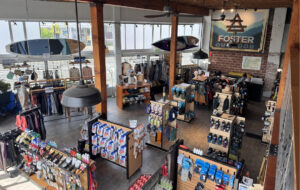 The new gear side of the business reflects the same clear-eyed thinking. On top of carrying big ticket items like tents, Foster Outdoor is the go-to accessory shop — pocket rocket stoves, water filters, bug spray, food, fuel — it has all of the gear people realize they need the night before they leave. All those accessories are then supplemented by a consignment floor that turns over constantly, with hundreds of used pieces processed and shelved every single day.
“Once people start realizing that, you start seeing the same faces every week, every couple of weeks, coming in to see what’s new,” Turner says.
Those faces are driving from Northeast Portland, from Southwest Portland — neighborhoods that can be 15 or 20 minutes away with traffic getting over the bridges of the Willamette River. Turner tracks how new customers are finding the shop. Early on, it was Instagram and Facebook. Now it’s word of mouth, which is the only metric that really matters.
“That is the ultimate,” he says. “You can’t buy that.”
 Turner’s commitment to creating a welcoming place for people to shop outdoor gear shows in the shop’s logo, which has three stacked campground icons: a tent, a tree, and a picnic table. Turner calls it the “table tree.” Most people feel the logo is familiar without knowing exactly why. The picnic table is his favorite part — it represents community, gathering, and sharing food with people who have the same values. That wasn’t an aesthetic choice. It’s the reason he opened a store in his own neighborhood and poured everything into it.
Foster Outdoor turns seven this year. He has no plans to franchise or grow aggressively. If there’s a second location someday, Turner explains it’ll be somewhere with more established foot traffic. But for now, the store is becoming a destination on its own terms — people driving across the city, trunks full of gear to consign, regulars checking the floor every week for something new — it’s become a real place of community and discovery.
“Some things,” Turner says, “are just waiting for their next human to grab them and carry on.”