
In a cloudy, uncertain economy, running footwear has emerged as a bright spot for outdoor retailers, inspiring them to invest more in the category.
“In the past three or four years, outdoor retailers have really leaned into running more heavily,” says Sean Oakley, a rep for outdoor and run specialty stores in North Carolina and South Carolina. “It’s probably the best revenue generator for outdoor retailers right now, with all the other uncertainty and price variability that’s going on.”
At The Running Event (TRE) 2025, Beth Goldstein of the market research firm Circana revealed that running shoe sales grew 9% in 2025, significantly outpacing the overall footwear market. For 2026, she expects the momentum to continue.
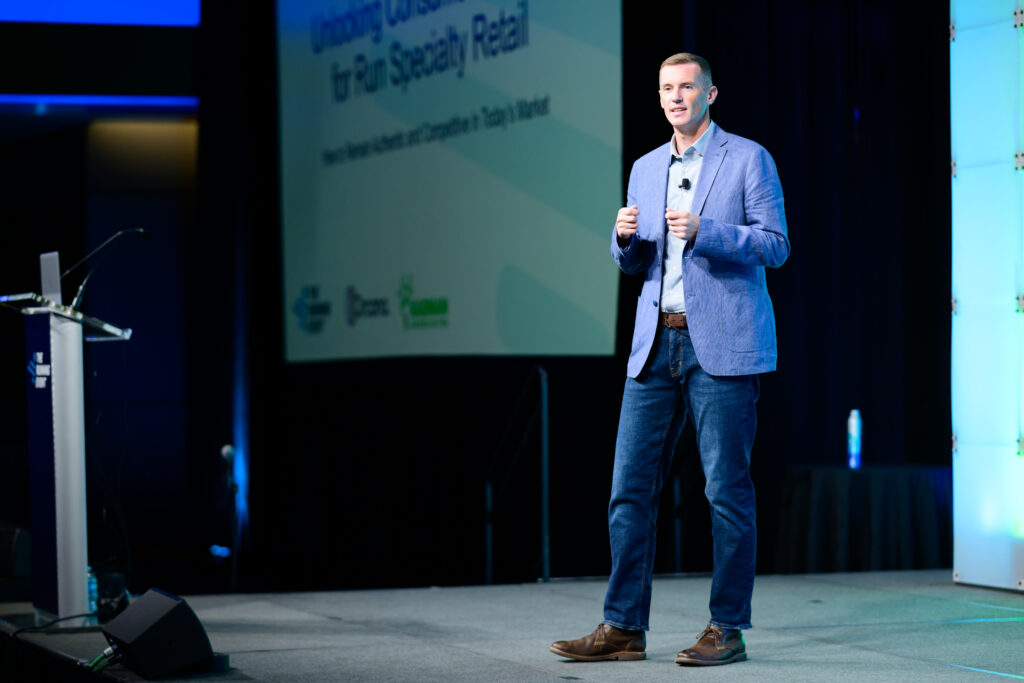
During a presentation at TRE, Goldstein and David Durkin of the retail consulting firm Karnan Associates shared several key insights and trends concerning the running market. For outdoor retailers, the following six takeaways offer a roadmap for navigating the sector’s continued expansion.


1. Physical Retail Plays a Vital Role
Here’s great news for outdoor retailers: brick-and-mortar stores play a key role in the sales of running footwear. “Consumers really value the in-store experience in this industry,” says Goldstein, noting that brick-and-mortar stores generate 57% of running footwear sales, while online stores account for 43% of sales. According to Goldstein, specialty shops have become a critical “place of discovery and education” for people purchasing running footwear.
She and Durkin emphasize that runners eagerly seek out new brands and products, providing retailers with the opportunity to pioneer young companies and carry unique products. “If there’s a brand that is getting some traction and some visibility online, you can be the first place where somebody sees it in a store,” says Durkin.
He urges retailers to partner with brands and host product demos for running clubs and other groups. Through these events, dealers can build relationships with the local running community, connect with prospective customers, and position the store as a key source for testing the latest products.
2. Social Media Drives Sales
TikTok, Instagram, and other social media platforms inspire many consumers to purchase running footwear, especially those aged 18-34. According to Circana’s research, 86% of consumers in this age bracket say they use social media to discover footwear brands and retailers or learn more about them. Also, about 60% say they purchased footwear that they saw on social media.
“The really interesting part here is the in-store piece,” says Goldstein, noting that 43% of consumers who bought a product after seeing it on social media purchased the item in a physical store. And that’s a growing trend, she adds. “So, it’s really important to recognize that social media can really work for you and not necessarily against you,” she says. “Consumers want to touch and feel a product even if they saw it on social media first.”
3. Meet Customers Where They Are
Traditionally, run specialty stores have encountered people when they first entered the sport and shepherded them as they advanced in their skills and experience. “We’ve created runners, and we’ve led them from the beginning,” says Durkin.
These days, however, many new runners complete 5Ks, 10Ks, or even marathons without frequenting a specialty shop. “These new runners are down the road a bit,” says Durkin, noting that retailers must now proactively find these participants and give them a compelling reason to visit the store.
“You have to meet them where they are,” says Durkin. “It might mean going out to their workplace and doing a footwear fitting or going out to where their running club meets and doing something there. It might mean leading a new training program that pulls them into the store or having awesome social media ambassadors that connect with runners online.” The bottom line is that outdoor retailers must explore beyond their four walls to engage the broader running community.
4. Target Runners by Participation Level
Retailers catering to the running market should pay attention to participation numbers for casual, moderate, and serious runners, says Goldstein. “It’s important to segment the market,” she explains. “You have to really understand the way consumers are using products and, therefore, know what they need.”
According to Circana’s research on consumer spending, the primary driver for running footwear remains performance, with 42% of footwear dollar sales attributed to sports and exercise. However, a significant portion of the market is lifestyle-oriented: 32% of dollars are spent on casual, everyday wear, while the remainder is split between occasional recreation (10%), work (9%), and general multi-purpose use (5%).
Among people who identify as runners, 56% are casual participants, 34% are moderate participants, and 10% are serious runners.
5. Maximize Add-On Sales Opportunities
While outdoor retailers are focused on running footwear, they also have excellent opportunities to sell runners additional gear, accessories, and apparel.
Knowledgeable sales associates can recommend products that runners might want or need as they progress in the sport and encounter new conditions. “As your long run gets longer, it might start to feel kind of miserable, and we should think about fuel or hydration,” says Durkin. During fall and winter, as daylight hours dwindle, retailers can pursue add-on sales with headlamps and reflective gear.
The colder months also offer opportunities to sell a wide range of running apparel. “As it gets colder, think about how you’re going to keep customers layered so they’re comfortable and can run all winter long,” says Durkin.
6. Diversify Your Brand Portfolio
Big brands like Brooks and Hoka top the running footwear sales charts, but consumers are also eager to try products from a wide range of other companies.
“We’re seeing a diversification of what customers are buying, and we see some opportunities to introduce new products and new brands to them,” says Durkin.
At TRE 2025, Circana revealed its 2025 list of the top 10 best-selling brands at independent run specialty shops. The companies ranked 6 through 10—including smaller brands like Altra and Topo Athletic—saw some of the most significant sales increases and notable margin growth. “We’re seeing significant increases in profitability of those brands outside the top five,” noted Durkin.
Retailers who lean into experimentation—backing emerging companies and fresh concepts—stand to gain the most in today’s market. With new products capturing a significantly higher share of the business in 2025, Goldstein asserts that “innovation and newness” are driving foot traffic in specialty shops.
Fuel Your Growth Through Running
Facing uncertain economic headwinds, outdoor retailers have a significant opportunity to strengthen their footwear business by leaning into the running market. By understanding and leveraging key trends—such as the role of brick-and-mortar stores as “places of discovery” and the power of social media to drive in-store traffic—retailers can successfully navigate these shifts. Success in this category requires taking advantage of opportunities to “meet customers where they are,” pioneering emerging brands, and offering a curated selection of essential running gear and seasonal accessories. With focused execution, outdoor retailers can thrive within the robust and growing running community.
