

The practice of selling used gear and apparel is not new to the outdoor industry. Pioneers like Wilderness Exchange in Berkeley, CA, were selling secondhand products as far back as 1987. For decades, the movement remained niche, as a handful of additional secondhand shops opened and traditional retailers added small consignment sections. However, two recent trends have fueled significant growth in the resale business.
The first major increase occurred during the COVID-19 pandemic. As people sought outdoor activities and traditional retailers faced inventory shortages, shoppers outfitted themselves using the many online resale platforms that emerged during the pandemic.
The second, current surge in the resale market is driven by economic pressure rather than a scarcity of products. “This time, the interest in resale is tied directly to price sensitivity, which stems from the loss of buying power that people are feeling,” says Aaron Provine, president of Geartrade, a leading online seller of used outdoor gear and apparel.
Due to factors such as inflation and economic uncertainty, consumers are seeking more affordable used products—a trend expected to continue.
This market shift has prompted retailers, online sellers, and even brands themselves to invest heavily in their used-gear and apparel operations. Consequently, what was once a niche market is rapidly becoming a core, integral component of the outdoor industry.
While current economic factors are fueling the recent boom in the used gear market, affordability has long been its driving force. For example, over 20 years ago, the Second Gear store opened in Asheville, NC, with the specific goal of providing a budget-friendly option. As Second Gear states on its website, the company was “founded on the idea that enjoying the outdoors, and exploring all the adventurous activities it holds, shouldn’t always cost an arm or a leg—and especially NOT a whole paycheck!”
That message resonates particularly well with today’s consumers, especially young people.
“This new group of consumers is petrified of debt,” says Marty Parichand, owner of Outdoor New England in Franklin, NH. “They know their parents were strapped and didn’t pay off their student loans until they were 40, 50, or 60, and they don’t want it.” Since Outdoor New England opened a decade ago, it has offered a robust collection of boats and paddlesports gear on consignment.
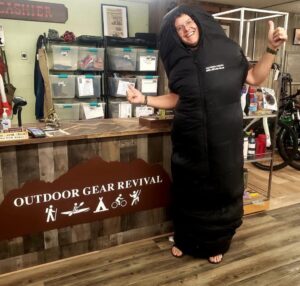 But price aversion is not limited to cash-strapped teens and twenty-somethings. Upper- and middle-class outdoor enthusiasts are also seeking deals. “Now you’re starting to see the guy that shows up with a Land Rover and doesn’t want to pay $400 for a jacket,” says Alejandro Guanaga, owner of Outdoor Gear Revival, a Knoxville, TN, store that primarily sells consignment goods.
For many Americans, new outdoor products are simply too expensive.
“The majority of outdoor companies have priced out the majority of consumers with things like $300 hiking boots,” says Provine of Geartrade. “Resale is simply the most affordable way for people to gear up and head outside.” According to Provine, Geartrade’s annual sales increased from approximately $2 million in 2020 to more than $5 million in 2022 and have continued to rise consistently since then.
Over the next four years, secondhand sellers can expect further gains. “The U.S. resale market is a significant and growing industry, estimated at $56 billion in 2025, with a projected worth of $74 billion by 2029,” says the National Association of Resale & Thrift Shops.
While online sellers, such as Geartrade, are benefiting from the resale boom, brick-and-mortar stores are also thriving.
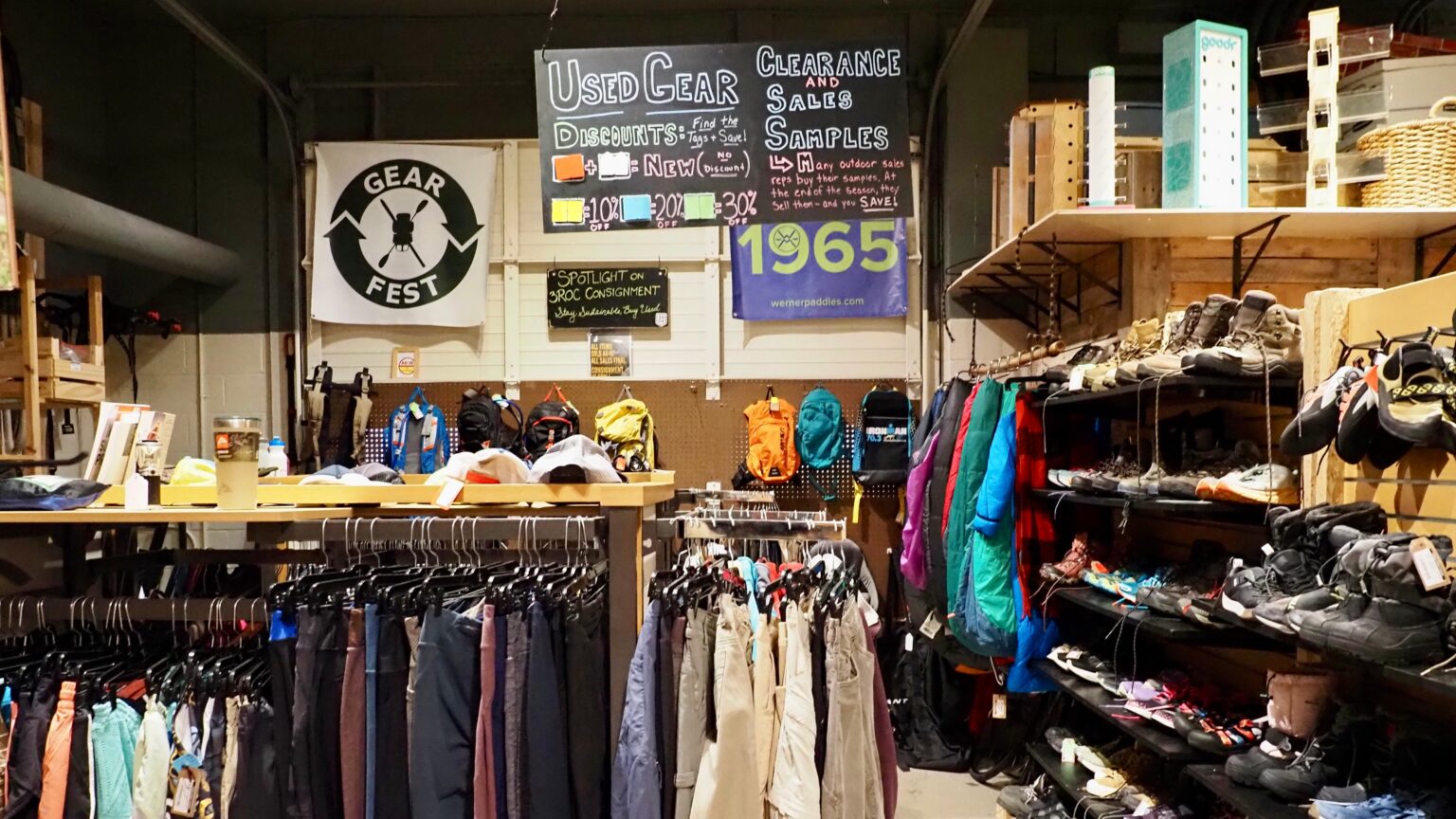
“We’ve definitely seen an uptick in sales,” says Jason Miller, co-owner of 3 Rivers Outdoor Company in Pittsburgh. “Our consignment area is as stocked as it’s ever been.” According to Miller, the store has offered consignment items since 2018, and used goods now account for 20% of sales.
Retailers commonly offer consignees 40% to 60% of an item’s sale price, paid either in cash or store credit. For example, Outdoor Gear Revival offers a standard rate of 50%. After covering overhead costs, including credit card fees, store owner Guanaga achieves an approximate 25% profit margin. In today’s competitive retail environment, every dollar of additional revenue is crucial.
Consignment sales also play an important role in making outdoor recreation both accessible and affordable, enabling retailers to cultivate a loyal and growing customer base. For Outdoor New England, consignment has been crucial since the store opened 10 years ago. Owner Parichand notes that beginners, especially young kayakers, often cannot afford a new boat and all the necessary accessories. “We’re able to provide a low-cost alternative to a kid just starting out,” he says.
Additionally, trade-ins and consignment sales enable the store to support paddlers throughout their development. As customers improve their paddling skills, they can trade in starter gear for store credit and purchase more advanced equipment that suits their abilities. “This allows us to support the customer throughout their journey,” says Parichand.
The resale business not only helps retailers attract and retain customers but also allows them to serve their communities in unique and impactful ways. In Pittsburgh, for example, 3 Rivers Outdoor Co. has successfully carved out a niche market catering to the rapidly expanding climbing community by selling used climbing shoes. “Consignment works out great for kids because they’re only in the shoes for a season or two,” says Miller, noting that consignment sales make the sport significantly more accessible to kids and families.
The resale business is also tapping into the growing trend of thrifting, where shoppers—especially young people—seek out unique or rare pieces from the past. “Customers love the vintage stuff,” says Guanaga. “They’ll find a purple 1980s Patagonia piece or old-school stuff from The North Face.” By stocking these second-hand items, retailers can appeal to consumers who not only want to express their individuality but also want to save money and prevent clothing from ending up in landfills.
While resale has its benefits, it also requires retailers to invest time and resources in various tasks, including negotiating with consignees, refurbishing products, and managing unsold returns. Despite this, most dealers say that the process is not a major hassle, and some stores are streamlining their operations. For example, 3 Rivers Outdoor Co. has automated parts of its product submission process to reduce paperwork and save time. The procedure begins with consignees submitting an electronic form. They then bring their items to the store for inspection and acceptance. Once accepted, the gear is instantly added to the shop’s inventory with the push of a button, creating a more efficient system for both the retailer and the consignee.
As brick-and-mortar stores are benefiting from the resale boom, online sellers account for the fastest growth in the used-goods market. According to the ThredUp 2025 Resale Report, online sellers are expected to account for half of all secondhand spending in the U.S. market by 2026.
Online platforms are becoming increasingly popular, in part because they offer people a convenient and easy way to sell their goods.
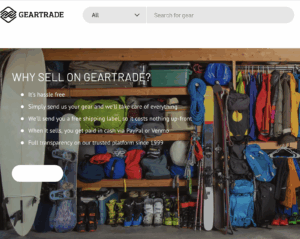 “Our consignment service is essentially an ‘easy button’ for sellers of used gear,” says Provine of Geartrade. “It eliminates all the pain points for sellers by giving people free shipping tags and boxes, enabling them to send us what they want in just minutes, and then we do all the work. We evaluate each product, research a fair price, take pictures, create product descriptions, and post the listings on Geartrade.com. And most importantly, we find a buyer.”
A growing number of brands are also benefitting from the online resale business, including Arc’teryx, Cotopaxi, Keen, The North Face, REI, and many others.
Patagonia—a pioneer in product recycling—offers the Worn Wear program, which enables customers to mail in used clothing and gear and receive a credit worth approximately 20% of each item’s suggested retail price. Customers can use the credit at Patagonia.com, WornWear.com, or Patagonia-owned stores. Some brands partner with third-party online sellers such as Geartrade to move used items.
“Over the last couple of years, we’ve built incredible trade-in partnerships with some highly influential brands, including DPS, Flylow, Jones Snowboards, and Stio, and more are on the way,” says Provine of Geartrade.
Third-party sellers provide brands a viable channel to move customers’ used gear, products customers have returned, as well as gently damaged items and samples used in photo shoots.
Additionally, third-party online platforms enable brands to reach new consumers. “Geartrade has an audience that is younger than Stio’s,” says Evan Torrance, vice president of DTC for Stio. He notes that Geartrade helps the brand reach “a younger audience interested in sustainability, stewardship, and re-use, all of which align with Stio’s core values.”
For outdoor businesses, the resale business will only become more important as economic conditions continue to strain the market. “With import tariffs increasing and supply chains potentially more challenged, resale in the outdoor industry is providing a meaningful new area of growth and means of supply that supports our stewardship goals and achieves strategic business objectives,” says Torrance.
While the used-gear market can boost bottom lines, it can also impact the outdoor industry’s broader goal of increasing participation. By removing economic barriers to recreation, the industry can reach a broader spectrum of people and ensure its long-term health.
At 3 Rivers Outdoor Co., Miller has seen firsthand how affordable gear has benefited people in his community. “I remember selling a Coleman tent to a guy for 40 bucks, and I’ll never forget it,” says Miller. “The guy looked at me and said, ‘Hey, I can take my family camping now.’ And I thought, hey, this is a win. This is it. This is why we do it.”
