A primary concern for retailers selling online is the “fit issue” that often keeps customers tethered to brick-and-mortar stores. Specialty shops have built their reputation on the personal touch they deliver in-store, where customers feel confident that expert staff will find them the perfect product. The challenge is replicating that same level of certainty for a shopper behind a screen.
“It’s a confidence issue,” says Youngstrom, explaining that online shoppers often abandon shopping carts because they are unsure of whether a product will fit. Citing data from Footwear Science, Youngstrom notes that sizing issues drive approximately 70% of footwear returns. Also, according to Alix Partners, 72% of consumers are more likely to complete a purchase if they feel confident about the size.
To bridge the gap between online browsing and in-store fitting, retailers can embed AI-powered technologies like Strut Fit on their product pages. This Shopify-integrated 3D foot scanner lets shoppers scan their feet with a smartphone and then provides accurate, brand-specific size recommendations. By boosting customer confidence in the fit, the tool effectively minimizes return rates; in fact, Strut Fit reports that its software can reduce return rates by 25%. Youngstrom also notes that fitting tools are a powerful driver of consumer loyalty, citing data from OneFit.ai which suggests that personalized sizing tools encourage 85% of shoppers to purchase more frequently.
While retailers must address the fit issue when selling online, there is another equally important task: bringing the expert guidance they offer on-site into their digital platforms.
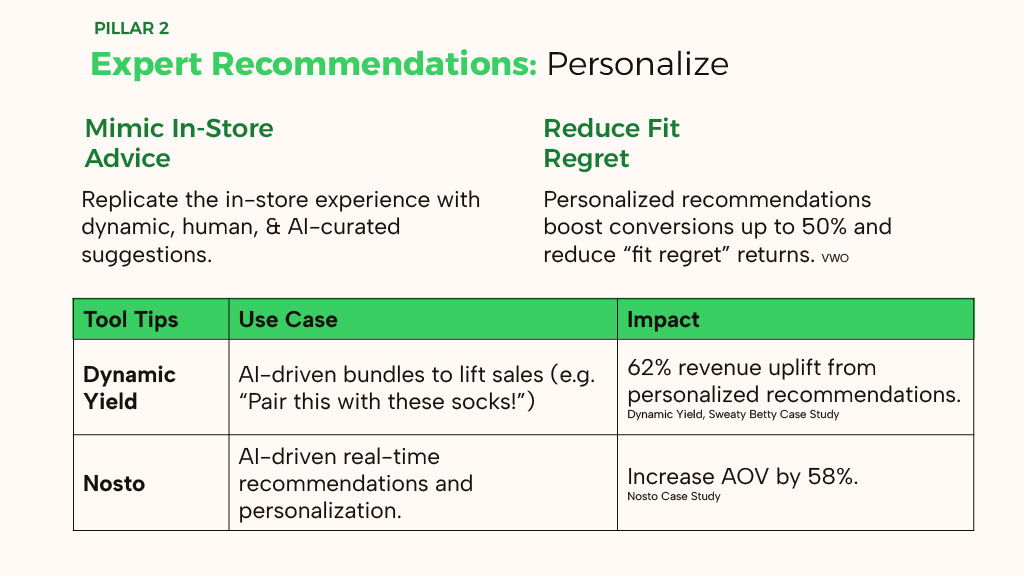
“You need to provide expert recommendations and personalization,” says Youngstrom, emphasizing that AI tools can help replicate in-store experiences. By leveraging AI-driven platforms, retailers can ensure that every online customer receives product recommendations tailored to their specific needs, effectively replacing the physical “touch and feel” experience with data-driven suggestions. “We are seeing pretty significant improvements in conversion by using these AI tools to drive personalization,” says Youngstrom.
He recommends evaluating tools like Nosto, an AI platform that functions like a virtual sales associate. The software analyzes real-time customer behavior and transactional data, such as browsing history, product preferences, and shopping cart patterns. Then it predicts and displays the most relevant items for each shopper.
Another helpful AI tool is Dynamic Yield, a Shopify-integrated app that analyzes browsing behavior, purchase history, and even current weather or a shopper’s location to suggest products they’ll most likely buy. With Dynamic Yield, customers can use conversational language to get product recommendations (e.g., “What should I wear for a summer hike in Yosemite National Park?”). Also, shoppers can upload photos to find similar items within a retailer’s offering.
This focus on personalized service reduces “fit regret” and boosts confidence for online shoppers. As a result, digital tools significantly boost revenue, with some applications claiming they increase sales by as much as 62%, says Youngstrom.

Personalized recommendations build consumer confidence, but that’s only half the battle. Retailers must also ensure the final transaction is effortless to prevent shoppers from abandoning their carts. Research shows that nearly 70% of online shoppers abandoned carts in 2024, sometimes because the checkout experience lacked the speed and ease they expected.
To solve this, Youngstrom recommends that retailers evaluate tools like Shop Pay, Amazon Pay, Google Pay, and other single click to pay solutions. These apps securely store and manage customer payment and shipping details, enabling seamless, one-tap shopping for millions of stores. Explaining the ease of the system, Youngstrom notes, “Instead of having to go on my mobile phone and key my first name, my last name, and my address, and then find my credit card and key that in, I can simply click the Shop Pay button.”
If you’re not using a one-tap system like Shop Pay, Youngstrom says you should allow customers to use a “Guest Checkout” function, rather than requiring them to enter extensive personal data. “It’s great to be able to have that customer log in and know who they are, but you don’t want to lose the sale because you’re forcing them to log in,” he says.
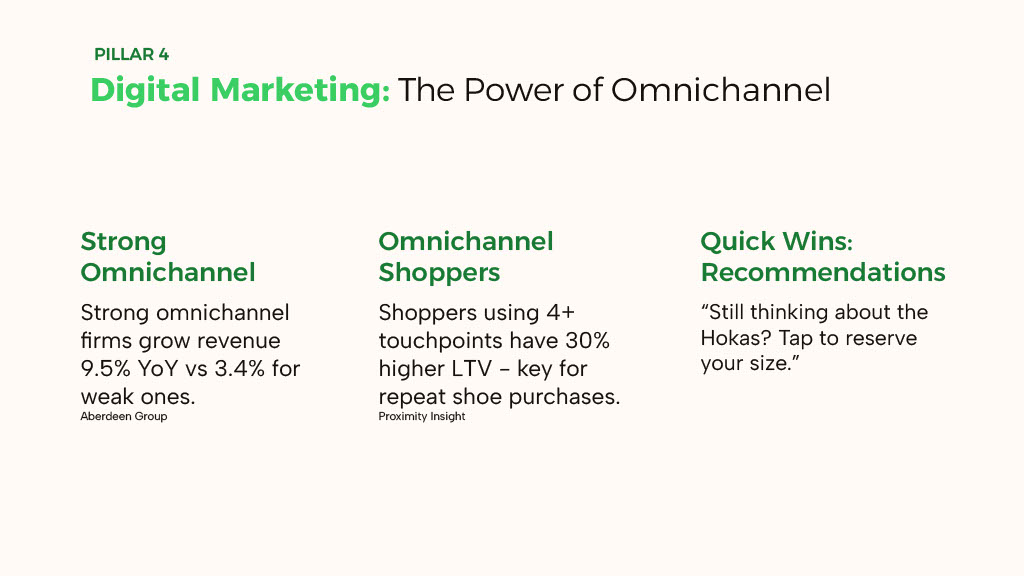
While seamless checkouts secure individual sales, the real value lies in connecting digital tools with physical stores to create a unified omnichannel experience. By synchronizing operations through real-time inventory management, retailers can engage customers across various physical and digital touchpoints—brick-and-mortar stores, e-commerce websites, mobile apps, and off-site events—without the frustration of finding items out of stock.
According to Youngstrom, this synergy pays off: “Merchants that offer four or more touchpoints see a 30% higher lifetime value per customer.” By expanding the ways customers can interact with the store, retailers are essentially earning more from each relationship.
Platforms like Shopify offer point-of-sale systems that maintain comprehensive inventory and customer data. This creates a unified data stream between the web and the point-of-sale, enabling online shoppers to see whether products are available in real time. For instance, if a customer discovers a product through an ad on TikTok or Instagram, they can instantly check the availability of the item for in-store pickup or home delivery.
Ultimately, an integrated inventory system bridges the gap between digital browsing and physical shopping. By providing a transparent, reliable view of what is available and where, retailers can capture every possible sale.
After a sale, retailers can use email and SMS messages to engage customers through additional touchpoints. When a unified POS system links an in-store purchase to a customer’s digital profile, it enables automated, personalized follow-ups. For instance, a customer buying running shoes might receive a text recommending socks or hydration gear. Adding a limited-time discount to the message transforms a single transaction into an ongoing relationship that drives repeat traffic.
Youngstrom points to Klaviyo as a good solution for automated email and SMS, noting that it sends messages at a structured cadence, so “they’re not going out willy-nilly,” and it targets each discrete customer in a database. When retailers deliver “the right message at the right time,” it prevents shoppers from clicking the “unsubscribe” button, he adds.
From nailing the “virtual fit” to mastering the omnichannel experience, retailers can meet customers wherever they are and deliver the expert guidance they want and expect. These initiatives do more than just optimize online sales; they build a thoughtful brand presence resilient enough to thrive in a competitive marketplace that is constantly evolving.