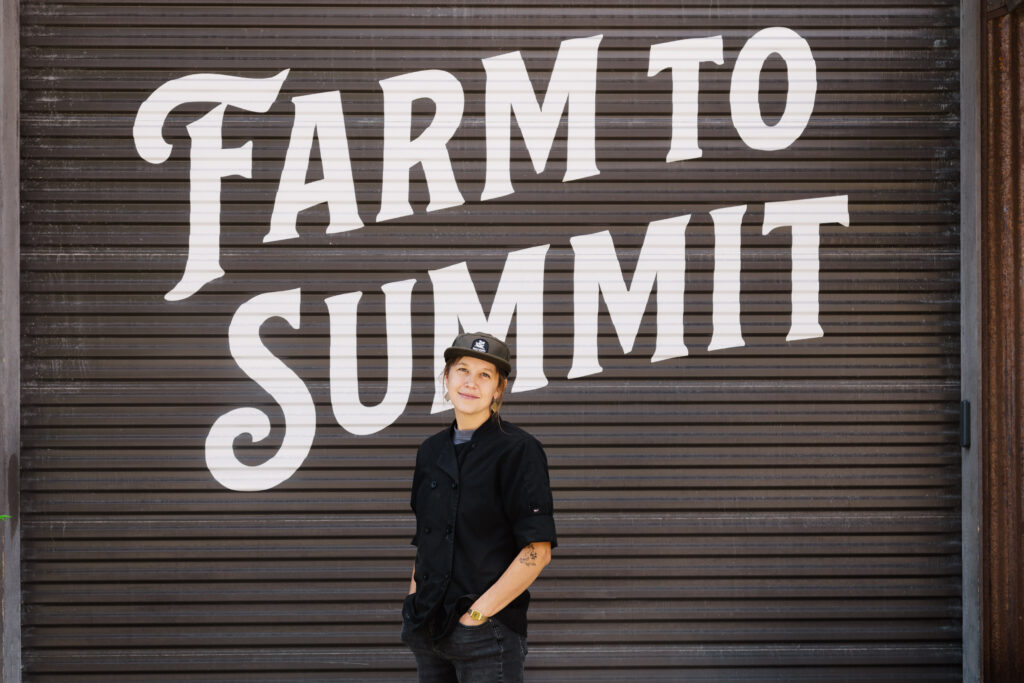
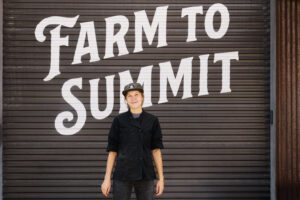
Farm to Summit’s story began when founder Lou Barton was deep into 20 days of backpacking through Yellowstone as part of a gig with the Forest Service. Barton was at a crossroads in her career and hearing a lot of complaints from her fellow backcountry travelers about their gastric distress when a pretty simple but powerful thought came to her mind. “What if I made backpacking food?” she remembers thinking. “I bet I could do a lot better.”
At the time, Barton had a master’s degree in plant biology and climate change biology and had recently walked away from a PhD program studying how alpine systems respond to climate change. The research mattered, but it felt distant from tangible impact. Meanwhile, in the field, she watched colleagues survive on packaged backpacking meals that left them bloated and complaining about the taste. As a foodie who had packed gourmet options for herself, Barton started scheming.
That off-trail thought experiment became Farm to Summit, the Durango, Colorado–based dehydrated food company that has built its identity not just around flavor, but around rethinking how food businesses can operate from the ground up.
The origin story is important because, unlike many brands that retrofit sustainability into their messaging, Farm to Summit was designed around it from day one. Barton and her co-founder set three pillars from the start: use the most sustainable packaging possible, source from local farms, and give back 2 percent of profits to nonprofits addressing food insecurity in their community. The meals came after that.
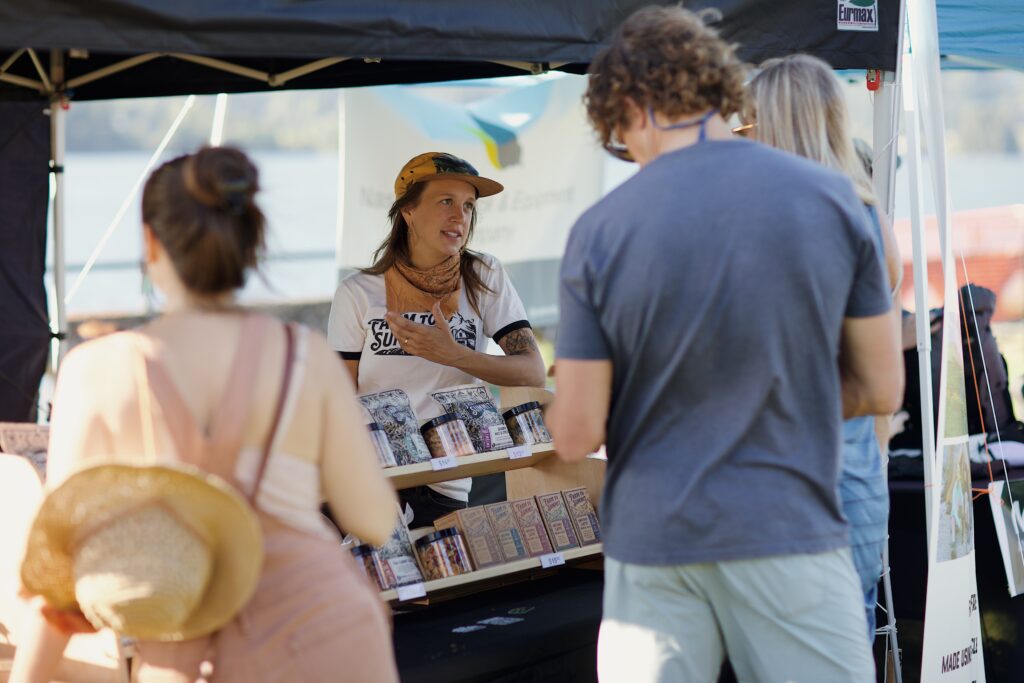
 The company’s first real test wasn’t a trade show or an investor pitch. It was the Durango Farmers Market where she began selling meals in 2021. Barton made 10 meals at a time in a small dehydrator she’d purchased on her way home from that Yellowstone trip. For three years, she used farmers markets as a soft launch and a live focus group. Customers, many of them serious adventurers, would come back week after week with direct feedback – what worked, what didn’t, and what her customers wished existed in this type of product. In a town like Durango that draws ultrarunners, backcountry skiers, and river guides from all over the country, that feedback loop was both immediate, demanding, and proved pivotal for the quality of Farm to Summit’s meals.
At the same time, the farmers market allowed Barton to build relationships on the supply side. At the end of each market, she would ask farmers what hadn’t sold, and it was often cosmetically imperfect produce without an outlet, like crooked carrots, hail-damaged cabbage, or surplus zucchini. She’d load her car with it and dehydrate it. That decision to lean into food that is perfectly edible but aesthetically flawed, also called ‘seconds produce,’ became one of the brand’s biggest differentiators.
Roughly 30 percent of food grown on farms is wasted before it ever leaves the farm. For small farms in southwest Colorado, that can mean significant financial strain. For Farm to Summit, those imperfections are irrelevant. If cabbage leaves are pockmarked from hail, they’re trimmed, chopped, and dried. If a farm ends up with 4,000 pounds of zucchini and nowhere to send it, Farm to Summit can step in. Over time, farmers who were initially skeptical of a small company buying hundreds of pounds of seconds produce have come to rely on it as an outlet for thousands of pounds.
Working with about 15 small farms, each under 10 acres, also builds resilience into the system. A late freeze might wipe out one carrot crop, but another farm can fill the gap. Barton plans purchases a year in advance, often buying produce the season before it’s needed, dehydrating it, and storing it. Once dried, ingredients like carrots can last for years if stored properly, giving the company flexibility and reducing pressure to match production perfectly to immediate demand.
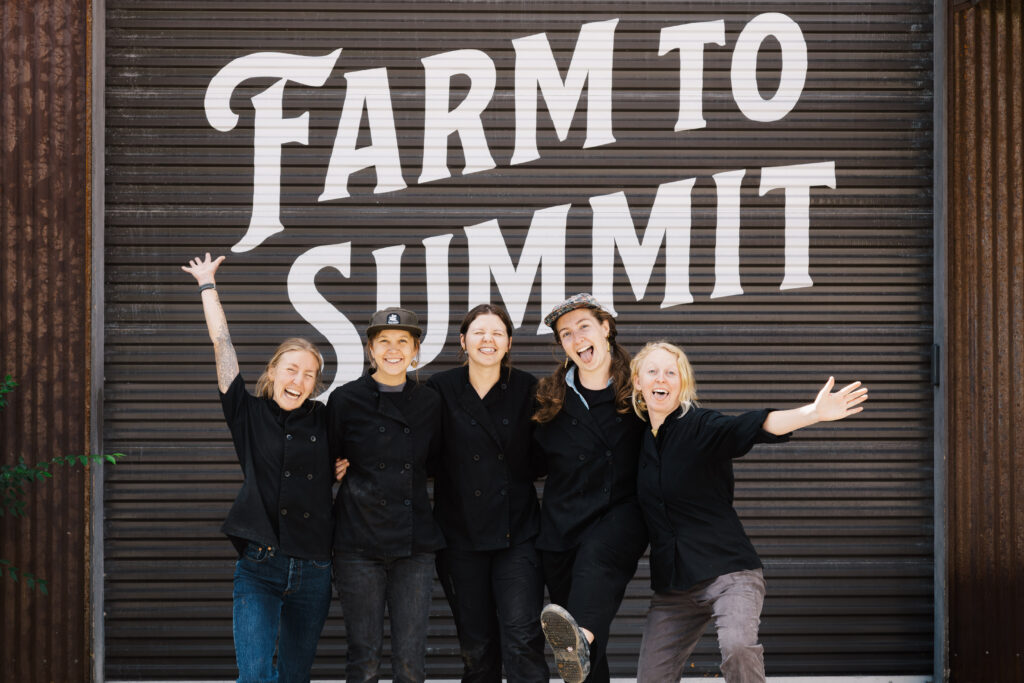
Scaling that model hasn’t been simple. Farm to Summit started in a cramped commissary kitchen with a two-hour nightly production window. From there, Barton and her team moved into a self-built 1,200-square-foot facility funded by a $100,000 loan and a Kickstarter campaign. In late 2024, they took another leap, moving into a larger Durango building before they had the numbers to fully justify it. A month later, they landed a contract with REI, launching into 35 stores.
A competitive state grant helped the company purchase key manufacturing equipment and hire staff, bringing the team to six employees last year. When REI later proposed expanding to 120 stores, Barton made a decision that reflects the brand’s philosophy: pump the brakes. Farm to Summit agreed to grow more gradually, prioritizing independent retailers and ensuring its farm partners could scale alongside it. “We love working with small gear stores,” Barton says. “That’s our bread and butter.”
Durango itself has been an oddly perfect incubator. While not a metropolitan hub like Denver or Seattle, and beyond the adventure community that rigorously tests the food, the town is filled with experienced business leaders who have retired there and are eager to mentor emerging founders. Barton credits that the network and town’s culture of supporting local businesses is catalytic to the company’s growth. The sense of community isn’t a marketing spin; it’s put into action by a team that tries to take hut trips together on weekends and partners with farmers who feel more like extended family than suppliers.
 That community mindset extends to Farm to Summit’s giveback program. The company donates 2 percent of profits to nonprofits working to reduce food insecurity in southwest Colorado, where food deserts exist alongside abundant agricultural production. Barton was initially worried that buying seconds might divert produce from food banks but learned that food banks can only accept so much of a single crop. By purchasing and dehydrating excess, the company creates shelf-stable food while still directing profits to organizations that expand access to high-quality ingredients.
Now, with its first dedicated marketing budget and a sales lead who is able to travel, Farm to Summit is stepping onto a larger stage at Switchback Spring in the Pathfinder section of the exhibit hall show floor, which highlights retail-ready young brands. For a company that has largely grown through a grassroots approach, this move signals a new chapter. Barton sees it as an opportunity to connect with specialty retailers who value transparent supply chains and community impact as much as flavor and quality of product.
For retailers walking the show floor, Farm to Summit won’t just be another dehydrated meal option. It represents a model we can all learn from.
To learn more about Farm to Summit’s work with local farmers and give back initiatives, visit their booth at Switchback Spring 2026. Discover the latest from Farm to Summit and other exhibiting brands on the show floor this June 16-18 in New Orleans, LA.