 For most of us who grew up in the world of television, magazine, and radio, the brand campaigns we remember were giants: Air Jordan, Budweiser’s “Whassup,” and, more recently, YETI with their cinematic mash-ups from years of narrative branded content films. We’re talking Super Bowl ads, massive budgets, and armies of creative agencies. But that feels almost prehistoric at this point with social media and the smart phone lowering the bar to the point where a brand can generate a buzz with a diligent series of Instagram posts or podcast appearances. How can brands take advantage of so much marketing potential at their fingertips without losing sight of their core message?
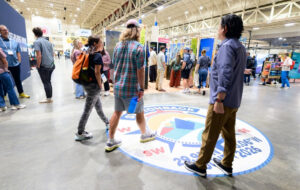
Amanda Smith, founder and CEO of Monday, a creative agency based in Portland, OR and Vancouver, BC, presented her perspective on the current landscape of marketing and branded storytelling on day one of Switchback Spring. Smith, on her “My Best Campaign” podcast, interviews marketing directors and founders to hear their success stories. It might sound obvious, but authenticity is a through line.
“You can do more with good scripting than costly production,” Smith says, citing a podcast episode with Peak Design’s Marketing Director Adam Saraceno. “We like to emphasize interesting over polish and authenticity over budget. Hold your core purpose tight but let your creative team go loose.”
So, if the bigger brands with the capital to invest in agency support are looking for ways to feel real and speak directly to their customer, it’s no surprise that emerging brands are recognizing an opportunity to use lo-fi tools and their own voices to build their brands. Trailheads spent some time at Switchback Spring talking to a few such brands on the show floor.
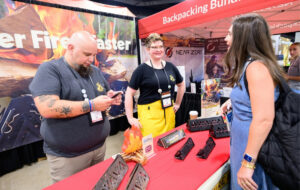 It’s hard to find someone living out their brand more authentically than Alyson Long and her husband Frank Kecseti, founders of Pyre Logs, a brand that makes stainless steel, easily portable campfire bases.
“We live full-time in a mobile home, so we roam,” says Long, who worked for fifteen years as a creative agency copy writer before founding Pyre Logs. “This design came out of our travels and frustration with not being able to have good fires in so many campgrounds. My dad and I used to have campfires all the time, so they’ve always been a way to connect for me. I’m all about stories, stars, and snacks, and we put all that lived experience into our brand.”
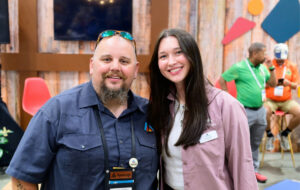 Other than the logo design, Long and Kecseti did all the branding themselves, mostly on Instagram since early attempts with Facebook yielded a negativity that Long feels has become inherent to the platform. Long exclusively uses her iPhone for the stills and videos she uses in their marketing materials, website, and posts, including a monthly post that’s almost comically simple: a 30-second stationary clip of a campfire. Another regular marketing feature is a monthly collaborative giveaway.
“We reach out to other fun, funky, up-and-coming brands and say, ‘Hey, you’ve got a few people, we got a few people, let’s get our folks together and give them something fun.’ And every single time we see an uptick on our Amazon and Shopify.”
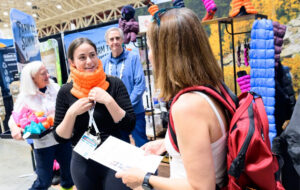 A similarly simple, yet impactful, marketing post came from Gear Envie, an outdoor accessory brand co-founded by Amy Maugeri and her mom and dad, Jody and Mark Canavan, in 2024.
“My most successful reel was a mash-up of me in our Hika gaiters with some simple text,” says Magueri. “It got 1.6 million views, and I made it in bed while breast-feeding.”
With a background in fashion and outdoor apparel tech, Maugeri felt confident in designing new products alongside her mom, who made her career in marketing. Their first creation, the recently patented Hika, is a down gaiter that insulates and protects from debris and bugs. But Gear Envie needed help in the initial branding stage.
“We outsourced the marketing at first since I was focused on the website, manufacturing, and deliveries,” Maugeri says. “The agency was really helpful with their post scheduling and consistency, but once we reached 500 followers, I took over the socials. Now we’re at 15,000 followers.”
 Maugeri shoots everything on her iPhone, accompanied by short text that’s pithier and more self-deprecating than salesy. Her toddler (only captured from behind) and her mom and dad often appear in the shots. It’s the story of a small, family-run outdoor brand enjoying their product and speaking directly to the customer.
“We haven’t spent anything on Meta ad buys, but we have invested heavily in trade shows,” Maugeri says. “We’ve grown from 1 to 65 doors plus two REIs (through their Local Buys network) in a year and we sell online with freepeople.com. We’re launching on Amazon soon and we do have an agency helping with that.”
While the organic, DIY approach has worked, as the sales and presence grows both in retail and online, Maugeri plans to hire a social media manager who can help shoot and, mostly, edit the content and handle the postings. But she’ll keep taking her products—and phone—to the family’s backyard trails for that grassroots content.