
The biggest trend at The Running Event (TRE) this year in San Antonio, TX, was impossible to miss: Trail running is booming.
“Trail running is going gangbusters right now,” says Dylan Bowman, professional ultrarunner and co-founder of the media network Freetrail. “It’s such an exciting time.”
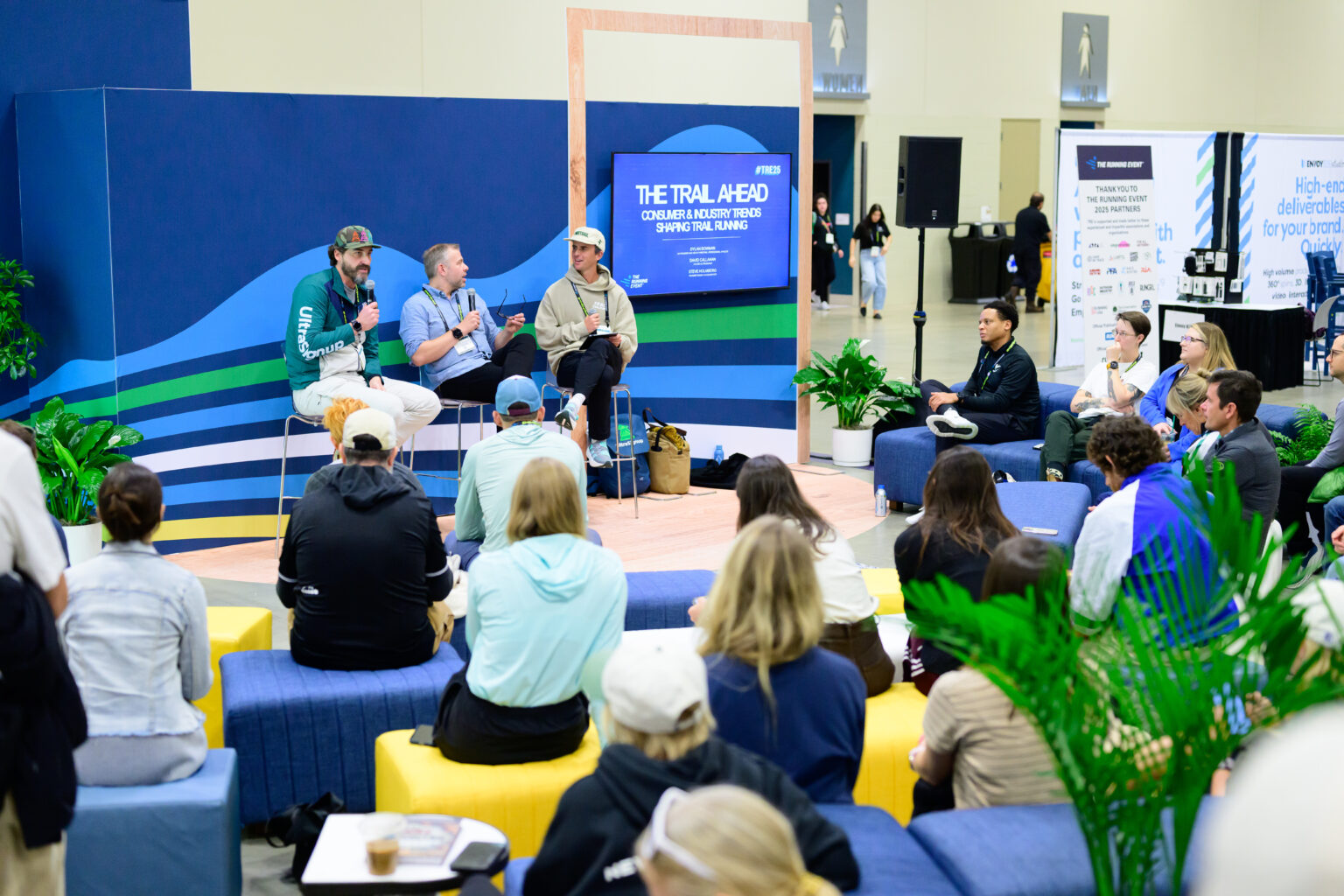
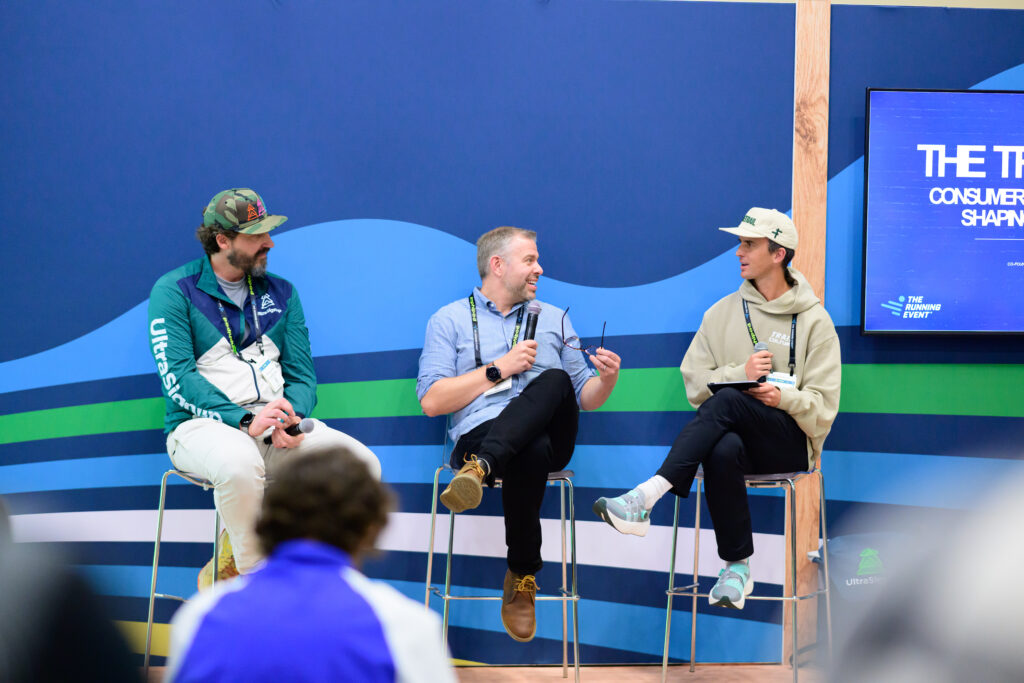
At TRE’s Training Camp Theater, located on the show floor, Bowman joined David Callahan, Co-CEO of UltraSignup, and Steve Holmberg, founder of the research firm Insight Accelerator, for a panel discussion on the state of trail running. Holmberg immediately noticed the increased emphasis on trail running compared to previous years. “It is a very different TRE than last year,” he says. “The amount of trail product we’re seeing on the floor is a clear indication that this is where the energy is.”
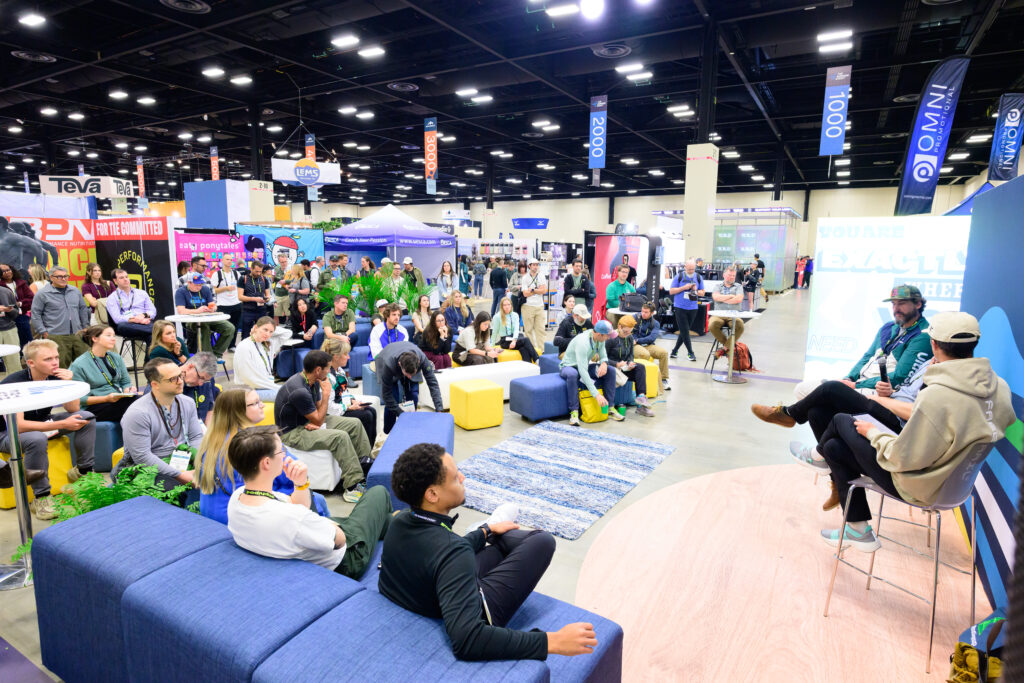
A large crowd filled the open-air theater and packed the surrounding aisles during the 45-minute panel, proving that trail running was a hot topic at TRE.
Drawing on hard data and their own experiences, Bowman, Callahan, and Holmberg not only presented evidence that trail running is growing but also detailed the various factors driving the boom. Here are some of their main insights:
Research shows that trail running is growing faster than the overall running market. “If you look at the five-year average annual growth rate in running, it’s up only about half a percent,” says Holmberg. Trail running, however, is growing at about 8% annually, he noted.
Casual participants (people who run 25 times or less during the year) are responsible for much of trail running’s growth, says Holmberg, noting that this segment is growing about 9% annually. Meanwhile, the number of core runners is growing at about 4%.
Holmberg states that many newcomers aren’t going “from the couch to trail running”—only about 20% are doing that. The remaining 80% cross over from road running. “I think it’s because trail running has a different vibe and feel,” says Holmberg. “We see many road runners seeking a new challenge or objective.”
The panel notes that some individuals are shifting to trail running because it caters more to enjoying the outdoors over speed and time objectives. Trail running provides the opportunity to pursue longer distances and different challenges at a slower pace, accommodating those who may naturally be getting slower.

One reason for trail running’s growth is that the sport offers a variety of formats to suit a wide range of goals and ability levels.
“With UltraSignup, we have hundreds, if not thousands, of different types of trail events,” says Callahan. “People are recognizing that they can find something that speaks to them, whether it’s a 5K, a marathon, a hundred-miler, or a 300-miler.”
Also, creative race directors are introducing diverse event formats, including relay races and the unique “backyard ultra,” where runners must complete a set loop (usually 4.1 miles) within a one-hour time limit. This continues hourly until only a single runner can complete the final lap,
Trail runners not only enjoy a wide variety of competitions, but they can also join a run club that suits their taste. “Run clubs are exploding right now,” says Callahan, noting that some cater to casual runners while others attract hardcore participants. “One reason they’re taking off so much is that every runner, especially those in a major city, can find a run club that they identify with.”
With the proliferation of trail running events and clubs, the sport is enjoying what Holmberg calls the “network effect.”
“As more people discover that there’s something special about trail running, they’re telling their friends and saying, ‘Let me take you out on a trail run.’ And that network effect is really powerful,” says Callahan. “Every Silicon Valley tech company is trying to figure out how to generate network effects. It’s the golden ticket, and it’s happening in trail running.”
Bowman notes that the network effect has helped the sport “maintain this growth trajectory without losing the culture.”
 While the network effect is driving growth, social media is also influencing trail running.
“I call it the YouTubification,” says Bowman, explaining that documentary films and social media videos are attracting newcomers. “Suddenly, people are discovering the sport randomly when they’re scrolling on their various social media apps.”
With its growing visibility on social media, trail running now attracts more young people, including college athletes.
“This young crop is coming straight out of collegiate track and field,” says Bowman, noting that graduates who would typically pursue a professional career in track and field are also pursuing careers in trail running.
From college athletes to aging road runners, a broad range of people are gravitating toward trail running, partly because of its unique culture.
“It does have a different feel to it, a different energy,” says Bowman, explaining that the sport appeals to people who don’t necessarily prioritize their individual performance.
“It’s not always about being faster, it’s about enjoying the outdoors,” states Holmberg. “It’s not about the sort of current cyborg runner. It’s about not having your headphones in and actually connecting to nature.”
With more road runners entering the sport, there has been concern that their competitive nature might negatively affect the trail-running community. But that’s not happening, says Holmberg. “Road runners want to assimilate into the culture,” he says. “They don’t want to come in and change it and suddenly make it about time and speed.
Callahan shares he’s heard chatter that trail running could soon become overly commercialized as more brands get involved. But he believes local clubs and races form the foundation of trail running and have the greatest influence on its culture. “The backbone of this sport is all of these little races that are pocketed in these little communities of people that just care about spending time together outdoors,” he says.
In direct response to the surge in popularity of trail running, a growing number of brands are rapidly expanding their product lines to include specialized footwear, apparel, and accessories for the sport.
“As you look around and walk around the show floor, you’ll see a ton of brands are now focused on the trail community and trail products,” says Holmberg. “They very much see this as an opportunity to help grow the sport and grow their offering.”
He notes that longtime players in the running market, such as Brooks, are introducing more trail footwear, while traditional outdoors brands like Arc’teryx and La Sportiva are focusing more on the sport. Additionally, young companies like Mount to Coast and Norda are getting a foothold in the trail space.
“It’s creating an interesting challenge,” says Holmberg, explaining that the market is seeing a flood of interesting products, though consumers could become confused by the overwhelming number of choices. “It’s creating a very competitive dynamic that’s going to be challenging to manage over the next couple of years,” he reveals.
Callahan states that he’s concerned the influx of brands will increase product prices and make it more expensive to enter the sport. “The last thing that trail actually needs is another barrier to the sport,” he says.
Callahan also worries that corporations will flood the space with large competitions that overshadow the smaller local events that have built the culture of trail racing. He says the health of the sport depends on its ability to remain a big tent that welcomes people of all types.
“There are no bounds in terms of how we define trail running, and that’s created some struggles as the sport tries to professionalize,” says Callahan. “But it means I have almost infinite choices to do amazing things in beautiful places and find the community that resonates with me.”
The current boom in trail running is not a passing fad, but a critical, enduring segment of the outdoor and specialty run markets. Its robust growth is fueled by a passionate and expanding consumer base, while its spirit of inclusivity welcomes all participants. As these strong factors propel trail running, the sport will play an increasingly crucial role in future business decisions. By embracing trail running and deepening their expertise, brands, retailers, and race directors have an excellent opportunity to capture new customers and expand their market reach.
