For nearly 20 years, Heather Marsh thrived in the corporate world, although her career’s high demands meant constant travel that kept her separated from her three children for extended periods.
“I was one of those women on the hamster wheel,” says Marsh, president of Run Wild Retreats.
However, the COVID-19 pandemic changed everything.
“Once we were all locked in the house together, I was like, ‘Oh, I don’t really know my children, and they’re actually fun, and why am I doing all this?’ I realized I needed to get off the hamster wheel,” she says.
After leaving her corporate job, Marsh began her search for a new venture and eventually discovered the opportunity to purchase Run Wild Retreats. This unique company, founded in 2010, specializes in leading trail running and hiking outings exclusively for women. What sets these retreats apart is their primary focus on well-being and self-care, rather than hardcore training or physical challenges.
According to Marsh, many participants are seeking relief from the same fatigue she experienced in her career.
“A lot of the women who come to us are burned out from working too hard,” says Marsh. “They’re trying to reach some dream accomplishment. They’ve been told they need to have a family, a job, and be athletic and strong.”
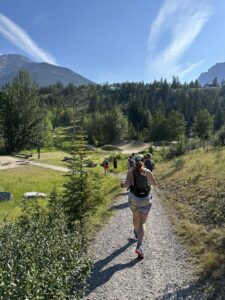 Fifteen years ago, while working as managing editor for Trail Runner Magazine, Elinor Fish launched Run Wild Retreats as a side hustle. She began organizing small running gatherings in Colorado’s Rocky Mountains, aiming to introduce more women to the sport of trail running. The demand for these retreats quickly grew, leading Fish to officially found Run Wild Retreats in 2010, a business that eventually became her full-time career. Run Wild Retreats now hosts about 25 outings per year in the U.S. and abroad.
Drawing on her own experiences with stress and burnout, Fish structured her retreats around mindful running. Her focus was not on competitive metrics but on prioritizing the wellness and mental health aspects of the sport.
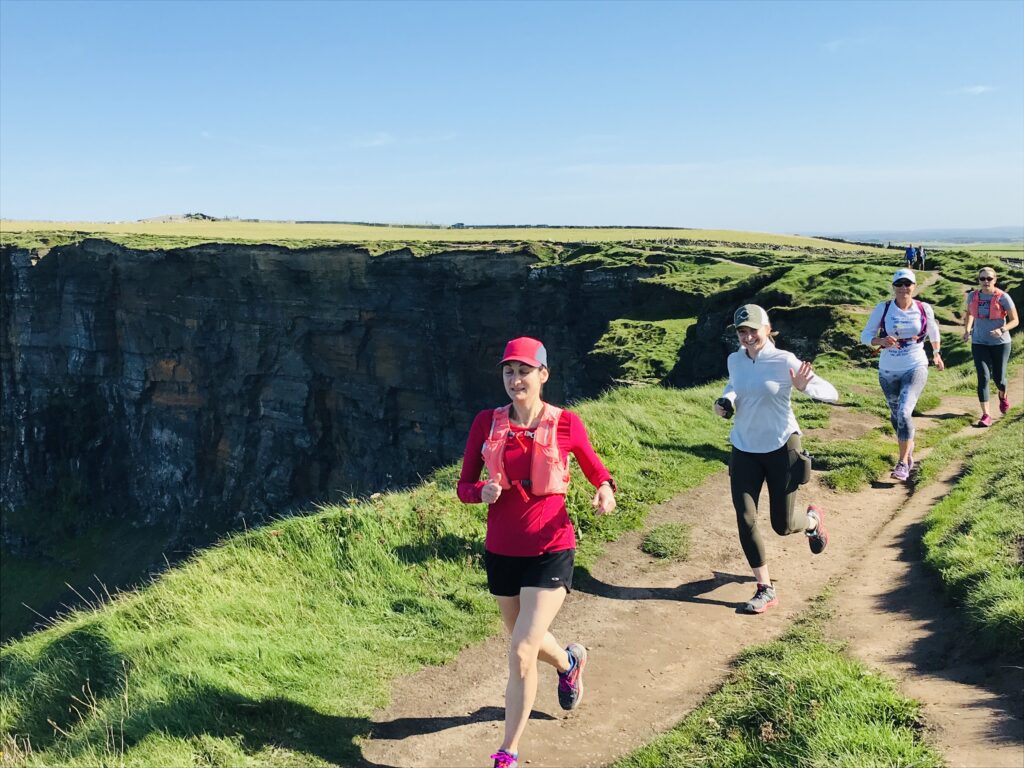
In 2024, Fish sold the business to Marsh, who seamlessly carried on the founder’s vision of hosting retreats that serve as a sanctuary from pressure. “We’re not running for time, we’re not training, we’re not tracking splits,” she says. “It’s really a time to fall back in love with running again while we’re out on the trail.”
Fish says the goal is to enhance form and comfort, not speed. “We’re not going to just sprint up the hill to see if we can hit our fastest pace. We’re going to really work on form, stride, pacing, and breathing, and it’s going to be a much more comfortable experience.”
While retreats help participants improve their running technique, they also teach the women to become more intentional in their everyday actions, says Marsh. Each retreat includes a “mindset clinic,” where participants reflect on the things they learned on the trail and then explore ways to apply those lessons at home.
“We try to get these women to take that back to their everyday life and live with intention and mindfulness, whether they’re at home, in the office, or on the trail,” says Marsh.
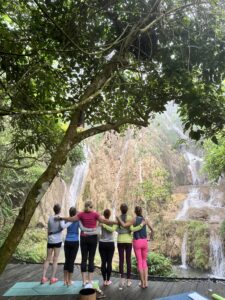
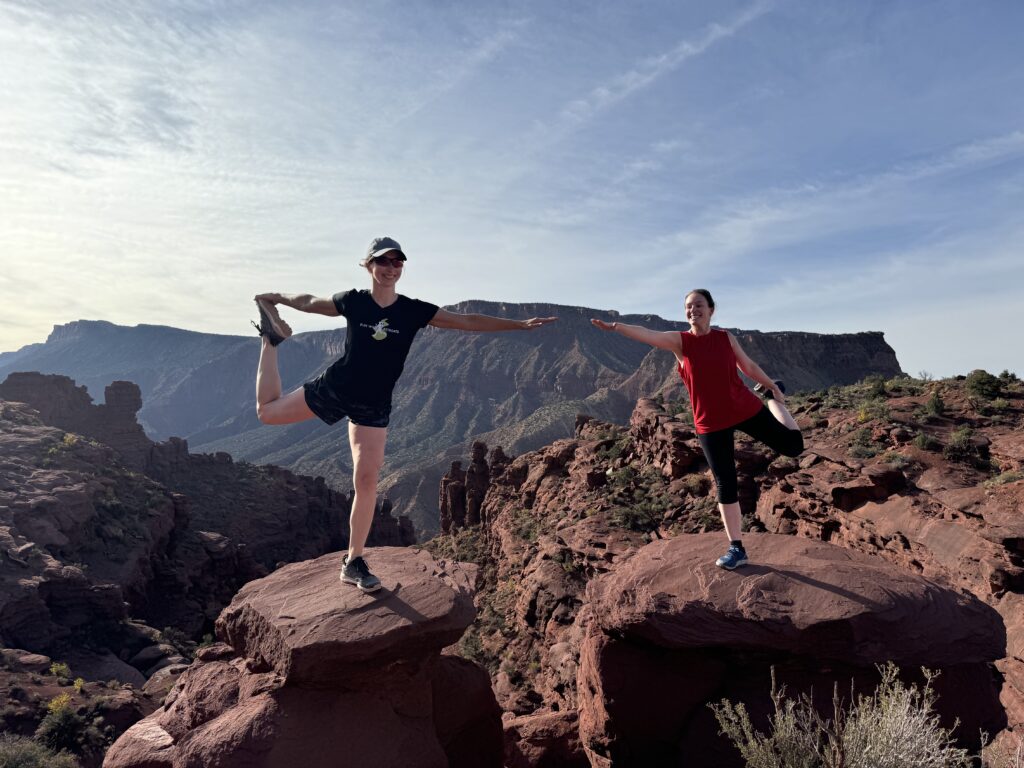
Each retreat balances time on the trail with time for recovery, she says. During the company’s signature Run & Restore retreats, participants dedicate their mornings to running trails and spend the afternoons focusing on wellness through yoga sessions, massages, or local activities.
The retreats also offer opportunities for journaling and other methods of self-reflection. To help people avoid stressors and distractions, trip leaders encourage women to leave their watches behind and refrain from using other electronic devices.
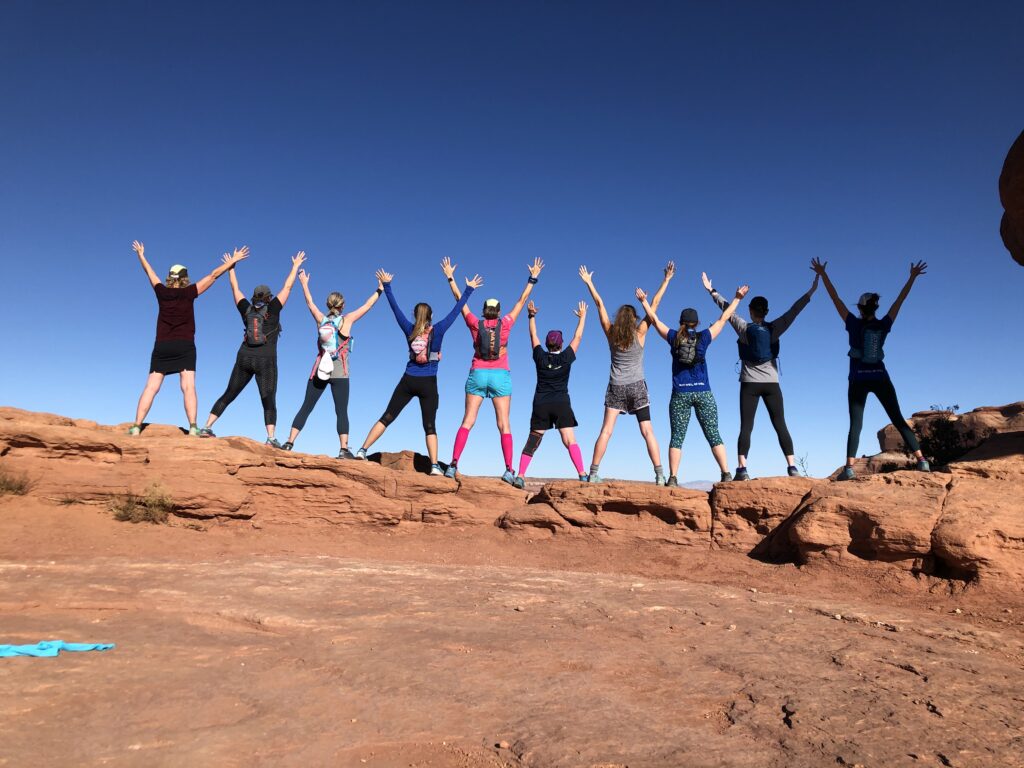
During group sharing sessions and meals, participants also have opportunities to connect. “They meet other women who’ve had similar experiences and similar successes in making intentional choices,” says Marsh.
Most of the participants are between 40 and 60 years old and are still working, says Marsh. While many of the women are seeking relief from burnout, others are solo travelers looking for opportunities to travel with like-minded women.
According to Marsh, many clients are also seeking ways to experience remote trails safely. “Many of them have not necessarily run trails because they live in places like New York City or Detroit,” says Marsh. “It’s great to take them out into nature and run a trail and feel that sense of accomplishment.”
While most participants are experienced runners, the programs accommodate all ability levels. “We have trips where you run eight or nine miles a day, but we’re also developing trips where you only run five miles a day,” says Marsh.
Participants run as a group, but they use the “accordion” approach, starting together but then spreading out to run at their own pace. They regroup frequently for snacks, pictures, and clinics. Typically, guides are at the front and back and floating to ensure support for all speeds.
 While Run Wild Retreats designs its retreats to cater to runners of all levels, it also aims to deliver a memorable, bucket-list experience. The trip location is just as important as the daily programming, says Marsh, noting that most participants first focus on a destination when choosing a trip. Therefore, the company typically selects popular places that offer good running trails. In the United States, trips take place in Moab, UT; Arizona’s Sonoran Desert; Whitefish, MT; Stowe, VT; and Asheville, NC.
Retreats also take place in Alberta, Canada, as well as a diverse range of overseas destinations, such as Vietnam, Bhutan, Iceland, and Italy. This year, Run Wild Retreats added trips to France, Greece, and Thailand.
In addition to adding new running destinations, the company has also launched Explore and Restore hiking trips. According to Marsh, these retreats serve the expanding market of women traveling solo.
In 2024, a Virtuoso trend report showed that women represented 71% of solo travelers.
“The Explore trips are for people who want all the benefits of connecting with other women and experiencing the wellness activities, but don’t want to run anymore or aren’t runners,” says Marsh.
She notes that the slower pace of the hiking trips allows women more time to connect and bond on the trail, as walking a given distance takes significantly longer than running.
“We’re going to take a nice conversational pace, we’re going to stop, and we’re going to have moments in nature,” says Marsh. “If there’s a lake along the way and it’s really hot, we’ll jump in. So, it isn’t about the mileage.”
The hiking trips also allow the company to explore a wider variety of destinations, including those with steeper terrain. The new Explore and Restore programs take place in Yosemite National Park, Slovenia, Iceland, and Norway.
Similar to the trail running retreats, the hiking trips include daily accommodations, so participants don’t have to camp. Like the running trips, the hiking retreats also combine time on the trail with restorative activities in the afternoons.
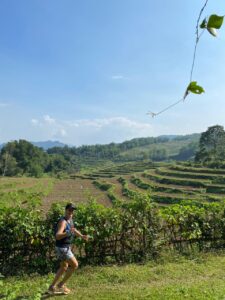
The hiking retreats are part of an overall plan to expand the business, says Marsh, noting that she might double the number of retreats in the next three years. Her company not only benefits from the influx of women travelers but also from the growing popularity of trail running.
“An 8.5% increase in trail running between 2023 and 2024 indicates that the trend is accelerating as road runners sample the trail or switch to trail only,” according to the Outdoor Industry Association 2025 Outdoor Participation Trends Report.
As Run Wild Retreats expands its reach among trail runners and hikers, it will continue to uphold its core mission of enhancing the health and well-being of women, providing the skills, knowledge, and inspiration to break free from the “hamster wheel.”
“I feel like we’re giving them tools to take back to their day-to-day life,” says Marsh. “They learn to take moments out of the day just to appreciate what’s going on and give gratitude for what’s around you.”
At the end of most retreats, Marsh observes a transformation in the women. “I can see a change,” she says. “They’re lighter in their spirit.”