
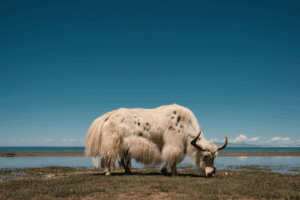
 Conservation became a hot topic in the outdoor industry this spring following a string of government actions concerning public lands. Executive orders and proposed legislation called for increases in oil, mineral, and timber extraction, the elimination of certain national monuments, and even the sale of some public lands.
The turn of events highlights the importance of 1% for the Planet, a nonprofit organization that helps businesses contribute to environmental organizations and protect wild lands.
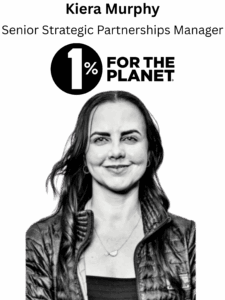 “We’ve certified $808 million and counting in environmental giving,” says Kiera Murphy, senior strategic partnerships manager for 1% for the Planet. “Our mission is to accelerate smart environmental giving. We’re on track to hit $1 billion in certified giving in 2028.”
Founded in 2002, 1% for the Planet was born from a conversation between Yvon Chouinard, founder of Patagonia, and Craig Mathews, founder of Blue Ribbon Flies.
While fishing the Madison River in Montana, they discussed the idea that businesses profit from the planet’s resources, so they should be responsible for their protection. Chouinard and Mathews sought a straightforward approach for companies to make a positive impact, and they devised a solution to encourage outdoor companies to donate 1% of their annual sales to environmental causes and organizations.
Naturally, given its founders, the movement was initially closely tied to the outdoor industry. However, it has grown far beyond its roots to include more than 4,000 businesses from 60 industries and over 7,000 environmental partners.
Since that fishing trip 23 years ago, 1% for the Planet has evolved into a global, multi-industry network, influencing business practices, consumer behavior, and environmental policy.
1% for the Planet operates on a straightforward model. “Our business members commit to donating 1% of their annual sales revenue to vetted and approved environmental partners in our network,” says Murphy.
The fact that companies donate revenues, rather than profits, demonstrates the seriousness of the commitment.
One of the organization’s chief roles is to facilitate connections between the business members and environmental groups. “We work with businesses to understand their goals and find the right partner so they can make the greatest impact possible with their 1% commitment,” says Murphy. “We connect members with environmental partners in a variety of ways—from our online directory (searchable by impact area and location) and through hands-on partnership advising.”
Another critical job for the organization is vetting environmental partners.
 “We carefully vet every environmental partner through a multi-step assessment,” says Murphy. Potential partners must align with one of the organization’s four impact areas: rights to nature, conservation and restoration, resilient communities, and just economies. Plus, partners must have the proper legal nonprofit status and demonstrate that they operate with integrity. “This helps ensure our network drives meaningful, credible change around the world,” she says.
1% for the Planet’s other primary responsibility is ensuring that businesses fulfill their 1% pledge. While 50% of the commitment must be made up of direct monetary donations to ensure environmental partners have the necessary funding, the remaining 50% can be fulfilled through various methods. These include volunteer time, in-kind product or service donations (such as a local brewery donating beer for a gala or a lawyer providing pro bono services to a land trust), or approved advertising to amplify the 1% movement. According to Murphy, this flexibility enables members to develop a giving strategy that aligns with their business and fosters strong, lasting partnerships.
1% for the Planet’s thoughtful, flexible approach has proven successful, with its membership growing steadily since its founding. However, 2021 proved to be an especially successful year, as the organization saw a 25% increase in new business members and a 63% increase in total certified giving. According to Murphy, 1% for the Planet now has more than 4,466 business members and 7,265 environmental partners.
The organization’s growth is largely due to the COVID-19 pandemic, which created a groundswell of “positive urgency” in the business community, says Murphy.
“Business leaders experienced a fundamental shift in perspective during the pandemic, recognizing that traditional shareholder-first models were insufficient for addressing complex global challenges,” she says. “Our model offers a powerful way for businesses and individuals to take intentional and meaningful action, even in the face of significant challenges.”
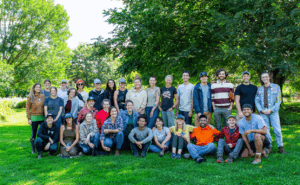 As 1% for the Planet’s membership has grown, it has also become more diverse. “A lot of people assume most of our members have physical products on retail shelves,” says Murphy. “In reality, our largest cohort of members is ‘professional services.’ Think financial advisors, event planners, marketing agencies, etc.”
Their membership base has also become increasingly international, now representing over 110 countries. “About 59% of the network is headquartered outside of the U.S., which reflects the truly global nature of our movement,” says Murphy. Since 2023, awareness of the 1% for the Planet brand has increased by 50%, she says, adding that the UK is its third-largest market, following the U.S. and France.
In 2024, most of the organization’s new members were from the Netherlands, which will serve as the location for 1% for the Planet’s 2026 Global Summit.
While 1% for the Planet has experienced an influx of members, the organization is facing a challenging business landscape due to tariffs and their effects on the global economy. “Any type of economic headwinds is going to create some uncertainty for businesses,” says Murphy. “Business leaders are much more focused on the ROI of any type of environmental commitment.”
However, 1% for the Planet can make a strong argument that conservation programs are wise investments for brands. Due to climate change and the increasing frequency of natural disasters, more businesses are evaluating the impact of environmental factors on their operations. For example, The Nature Conservancy reports that global investments in nature-based solutions for water security have doubled over the past decade, reaching $49 billion in 2023.
Companies that invest in conservation not only improve their operations but also attract more customers. Several studies show that consumers are increasingly spending their money on brands that prioritize social and environmental issues. “Tariffs have played a role in people’s purchasing decisions, but they’re also still making conscious choices in terms of the impact that they want to have with their dollar,” says Murphy.
 She notes that her organization’s members benefit when they place the 1% for the Planet logo on their products. When shoppers see the logo, they know the brand has demonstrated a certain level of ethics, accountability, and transparency.
While consumer behavior and business trends underscore the value of 1% for the Planet, recent threats to public lands also serve as a poignant reminder of the organization’s vital role.
This spring, when legislators proposed selling public land and opening areas to the extractive industries, 1% for the Planet joined Brands for Public Lands, a coalition created by The Conservation Alliance. Brands for Public Lands is comprised of more than 125 companies that advocate for public lands to better support the economy and the environment. The alliance provides a platform for unified advocacy, including signing on to letters addressed to government officials. It also uses social media to communicate a collective message to the public, encouraging consumers to support organizations that protect public lands.
“Instead of hearing different things from a lot of different brands, as a consumer, you’re hearing more of a collective, united voice,” says Murphy. “It’s increased awareness and motivated the public to call their local representatives. It’s incredibly powerful to have those businesses and organizations that you trust taking a stand for public lands.”
Click here for information on how to become a member of 1% for the Planet.
Click here for information on how to join Brands for Public Lands.
